
The Tool Isn’t Impressive, Trust Is
Which matters more, how impressive a tool is or how trustworthy it is? When I sat down with Brian Tracy, who literally co-authored the textbook on managing construction technology, his answer certainly caught me off guard.
“A tool is impressive to me by how trustworthy it is.”
Maybe that’s cheating, but honestly he’s not wrong. And the more you dig in, the more you realize that’s how we constantly miss the point with contech.

The Safety Net is the Saboteur
Four out of five digital transformations fail. That's an 80% strikeout rate which, even in baseball, isn’t very good at all.
And of course, we just love to blame that on the software. The clunky, broken, overpromised software. I get it, sometimes that might be true. But after twenty years of ConTech, it’s become clear that failure is rarely about the tool and more about the back door we leave open.
But don’t just take my word for it. Take from the guy who literally wrote the book on implementation.
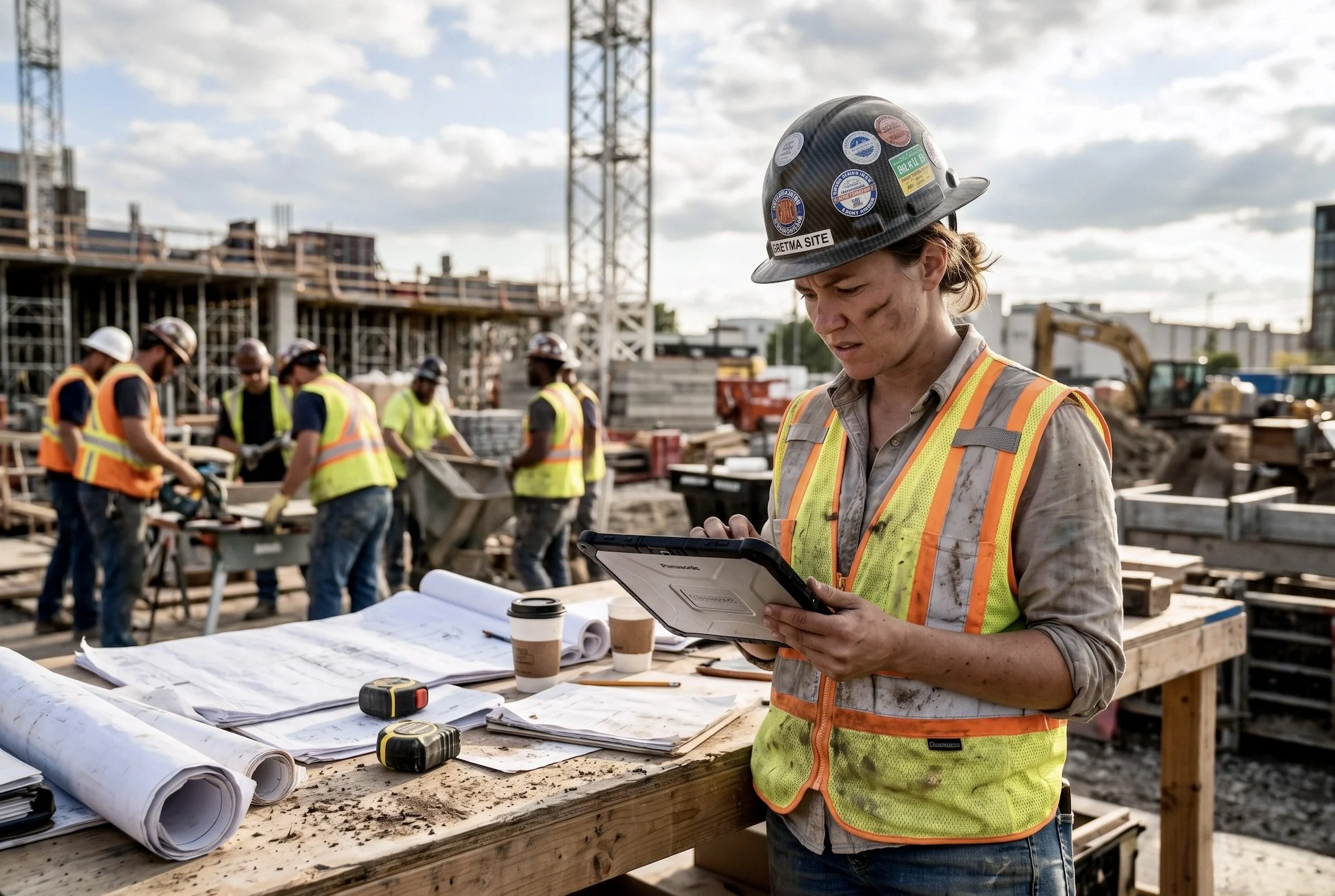
The AI Mirror
For twenty years, your data has been a mess. You know it. I know it. Every PM who's ever looked for the final budget knows it.
But it never really mattered. Because humans were doing the interpretation, making the mess tolerable and ultimately invisible. Construction quite literally runs on tribal knowledge layered over top of broken systems.
But then AI showed up and it asked to read the data. All of a sudden, the emperor has no clothes.
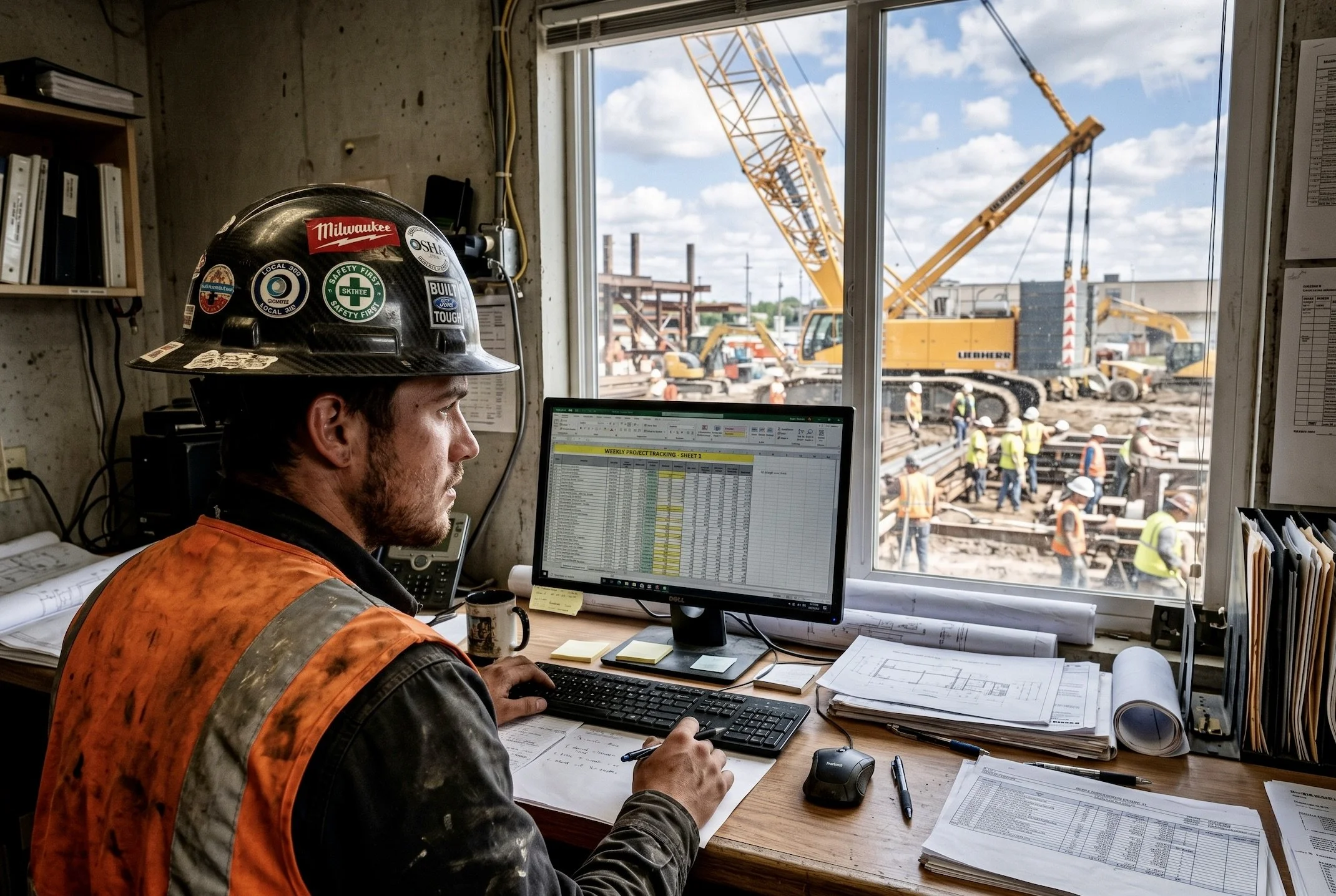
Pick Your Pain: To Change or Not
Believe it or not, there are two kinds of pain available to you in every major change. Whether it be a shift in process, tech or culture, we actually control our pain.
The first is obvious, the pain of changing. The second is more subtle, the long, slow accumulation of brokenness from choosing to remain stagnant.
All too often, construction chooses the latter thanks to the inherent risk avoidant nature of our industry.
But that mentality is costing us dearly.

The Moat is Gone. Now What?
Sometimes being right isn’t enough.
In fact, there’s a rare combination in engineering, being both deeply technical and deeply relational, that many engineers spend a career learning the hard way.
If they learn it at all.
So, in an industry that tends to treat these two things as mutually exclusive, Nick Heim has made it his mission to bridge the gap.
Especially now, as AI is begins to remove the moat of technical differentiation.

Build Value. Not Just Data.
We talk a lot about technology in this industry. AI. Robotics. Digital twins. The list keeps growing and every week there's another platform promising to transform how you build.
But Victor Muchiri asks a simple question that many people will skip right past.
Are we actually creating value? Or are we just getting better at tracking activity?

The Tech Isn’t the Problem. The Disconnect Is.
It happens all the time in construction. A new piece of technology is introduced using all the right buzzwords.
Revolutionary. Transformational. Game-changing.
But over time, it slowly fades into the background. Not because anyone made a decision to abandon it, but because it never became part of how the work actually got done in the first place.
For the most part, we’ve treated these moments like isolated misses and, of course, tell ourselves the next one will be different. But the more we do this it becomes increasingly clear, nothing about these misses are random.
They’re a pattern.
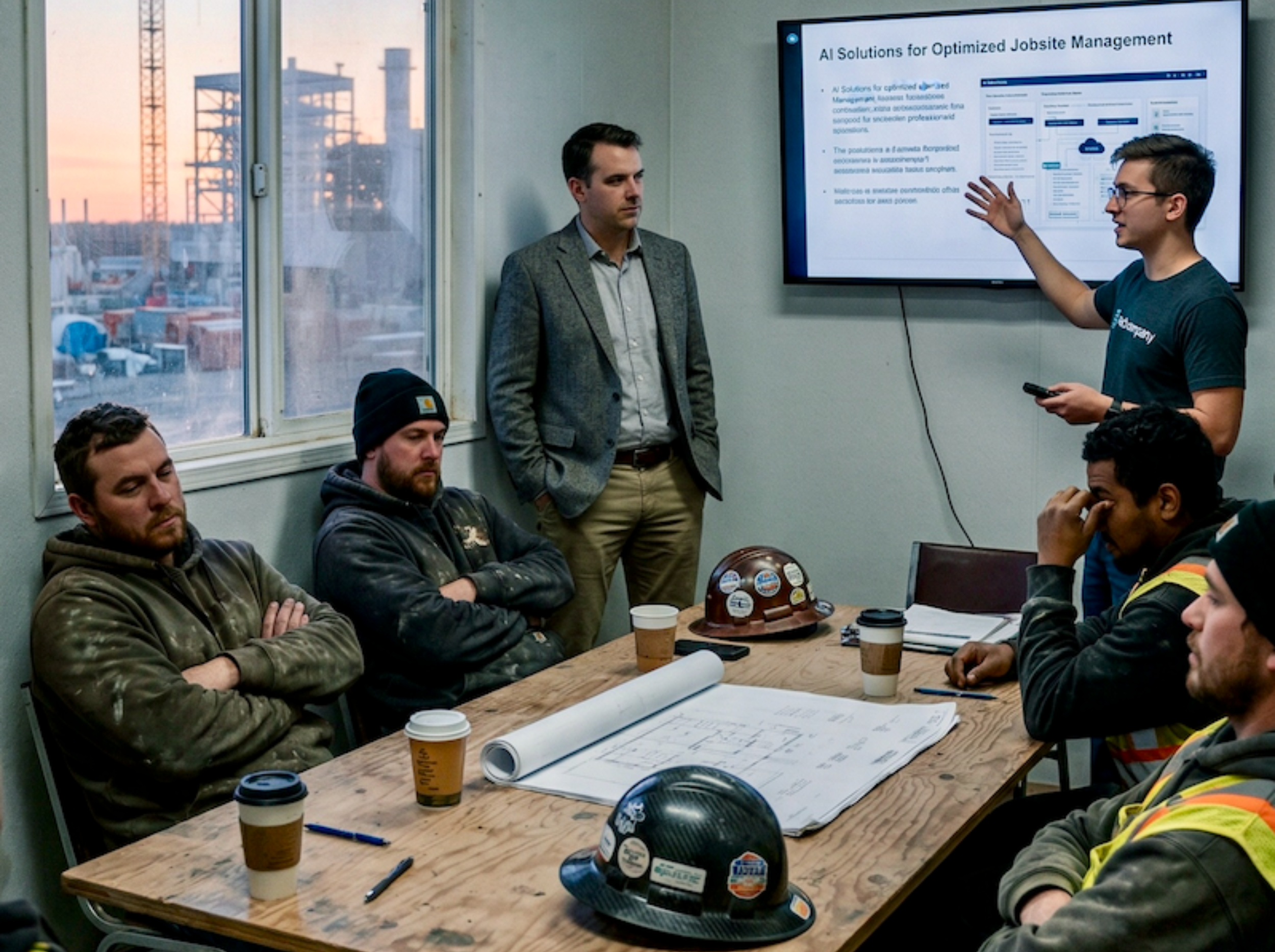
Stop Chasing Tech. Start Building Strategy.
If I were to ask you how many software subscriptions your organization currently paid for, could you answer?
That question may be a little tough for you to answer, and the truth is, you’re not alone. There is an industry-wide problem that we’re ashamed to admit.
Construction doesn't have a tech problem. It has a strategy problem.
And no amount of new AI-powered software is going to fix it.

TheEngiNerdLife in Review
Every new endeavor we attempt to tackle comes with a lesson, but that lesson rarely reveals itself up front. No, instead it tends to sneak up on you and slap you across the face.
So, after a year of TheEngiNerdLife, I got smacked by a lesson in clarity. A lesson about how all this work educating others has actually been teaching me all along.
Teaching me what exactly? Well, in a true end-of-the-year reflective fashion, here are the seven things 2025 taught me.

Subtract First: Why More Tech Is Making Construction Worse, Not Better
Sometimes more is truly just…more.
When it comes to technology, construction isn’t under-tooled. In a world that labels construction as a “laggard” the irony is that we’re actually overloaded. Yet global construction productivity has grown less than 1% per year.
If technology along were the answer, we’d be delivery every project faster and cheaper by now. But sometimes the quickest way to innovate is not by adding something new, but rather by taking something useless away.
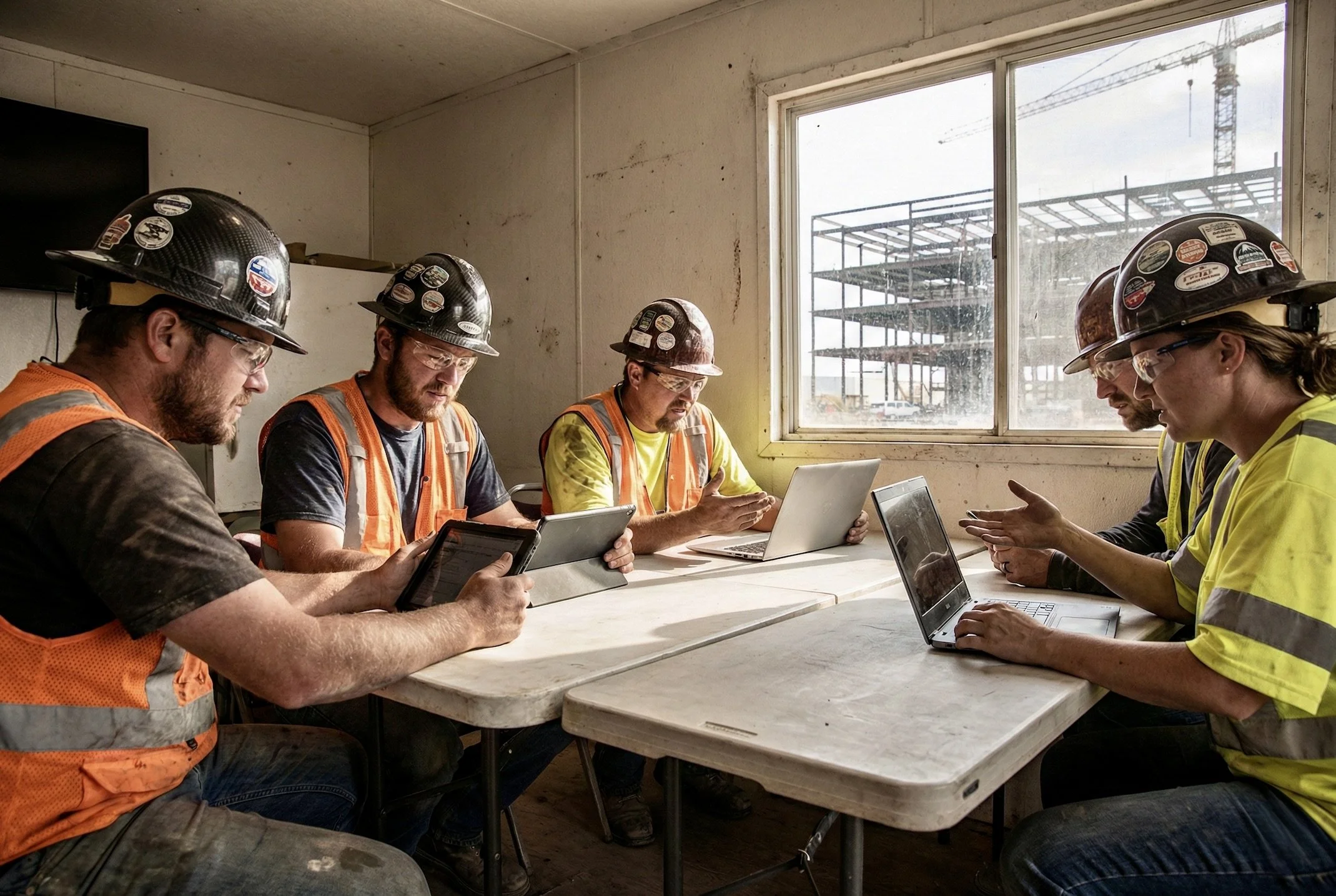
The Real Reason Your Team Hates New Software
In the physical world, the definition of project success is necessary. You don’t break ground (really, you don’t even mobilize) until the scope is clear. Yet in the digital world, we treat transformation like a simple software install instead of what it truly is: a behavior-changing effort that touches every corner of the organization.
Spoiler alert, that doesn’t work.
Digital transformations rarely fall apart because of the software. They fall apart because no one ever aligned on the purpose to begin with. And if the foundation isn’t right, nothing built on it will be either.

Take Back Your Crayons: How Construction Can Unlock Their Creativity
For the first several years of my career, I was that guy that was tucked away in a corner crunching numbers. Design calcs, takeoffs, unit pricing and production rates, you name it. I was an engineer, “perfectly suited” for that role. But inside, I was bored out of my mind.
Somewhere along the way we started being rewarded for precision and punished for risk, so we stopped coloring outside the lines.
It’s a lie that has been spreading for a long time now.
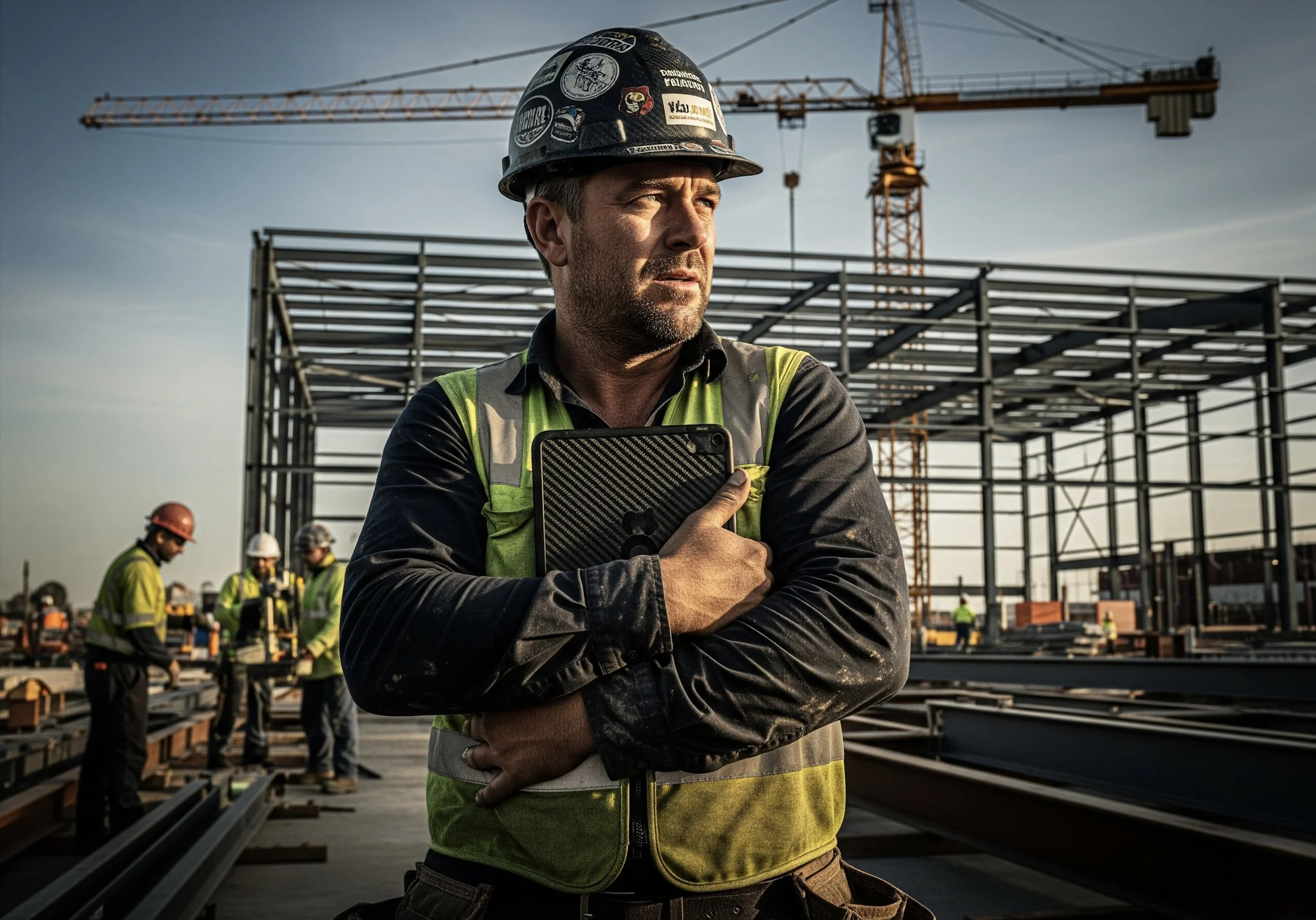
The Data Wars: How We Screwed Up Construction’s Future (and How to Fix It)
I’ll be super honest with you, for a long time I helped build this siloed data monster. While the idea was noble (one platform, one place, one set of data), what I didn’t realize is that we were really just building a single source of control.
And now, almost 15 years later, we’ve institutionalized a massive data imbalance.
It’s become a detriment to every phase of construction, negatively impacting owners and contractors alike. So, how do we fix it?
28 Rules for Building Smarter in Construction
I’ll never forget the day one of the area managers looked me dead in the eye and said, “This software is stupid.”
Because in some ways he was right. We had digitized chaos, which is a no-no.
It was a rule I learned the hard way. And after years in construction tech amassing thousands of similar conversations with people in the field I’ve collected 28 rules for building smarter in construction.
They’re part scars, part lessons learned and part rallying cry for the industry I love. Feel free to copy and paste.
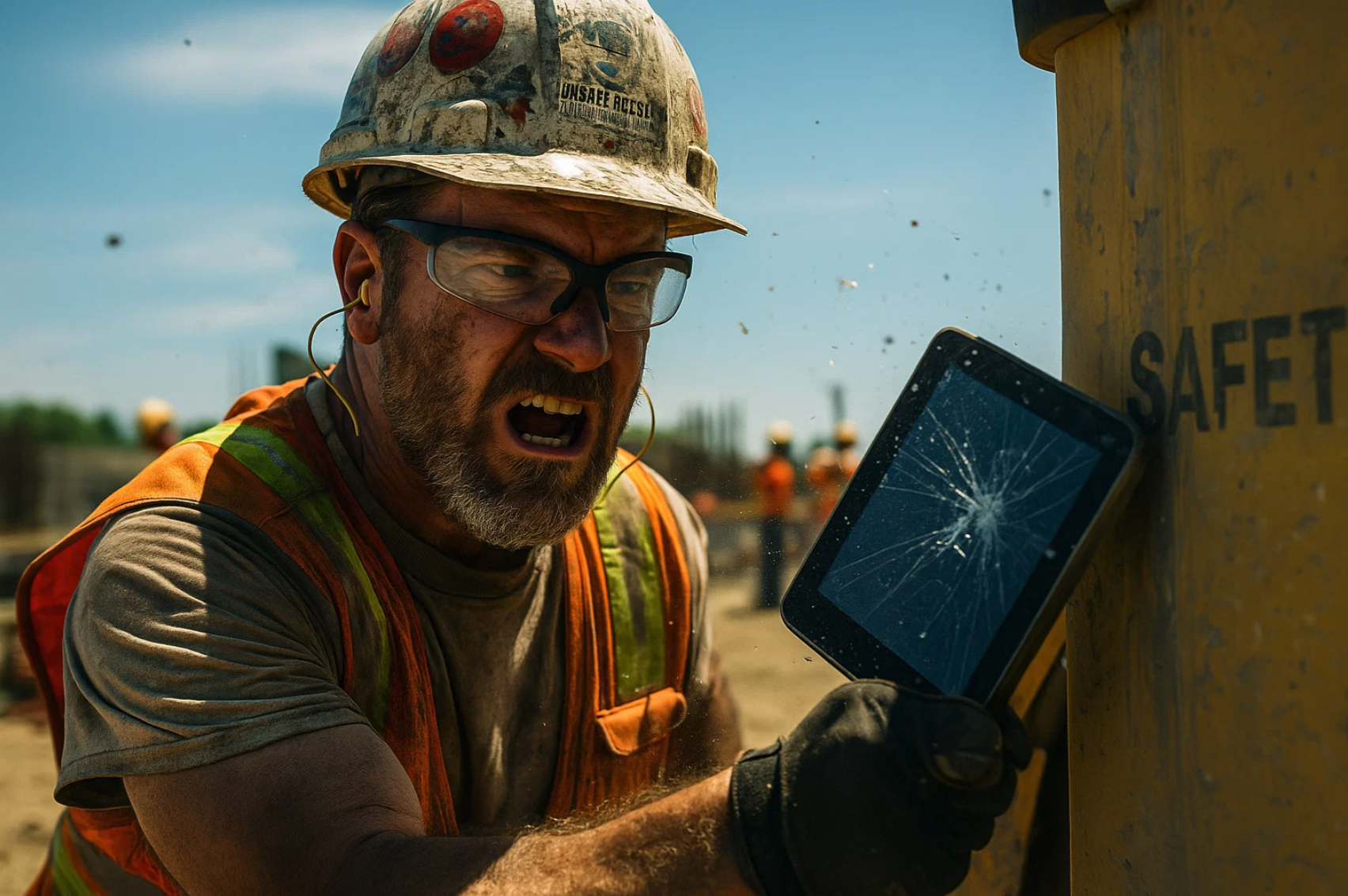
One Skill That Will Save Your Next Digital Transformation: Ask Better Questions
I’ve been on the forefront of a number of transformations. A project kicks off with high hopes, a vendor promises the moon and an executives declare it all “mission critical.”
But then reality sets in.
The tech doesn’t perform as promised, adoption lags and workarounds pile up leaving the field reverting to spreadsheets, sticky notes and side texts. The truth is, most of those failures weren’t caused by bad software.
They were caused by bad questions.
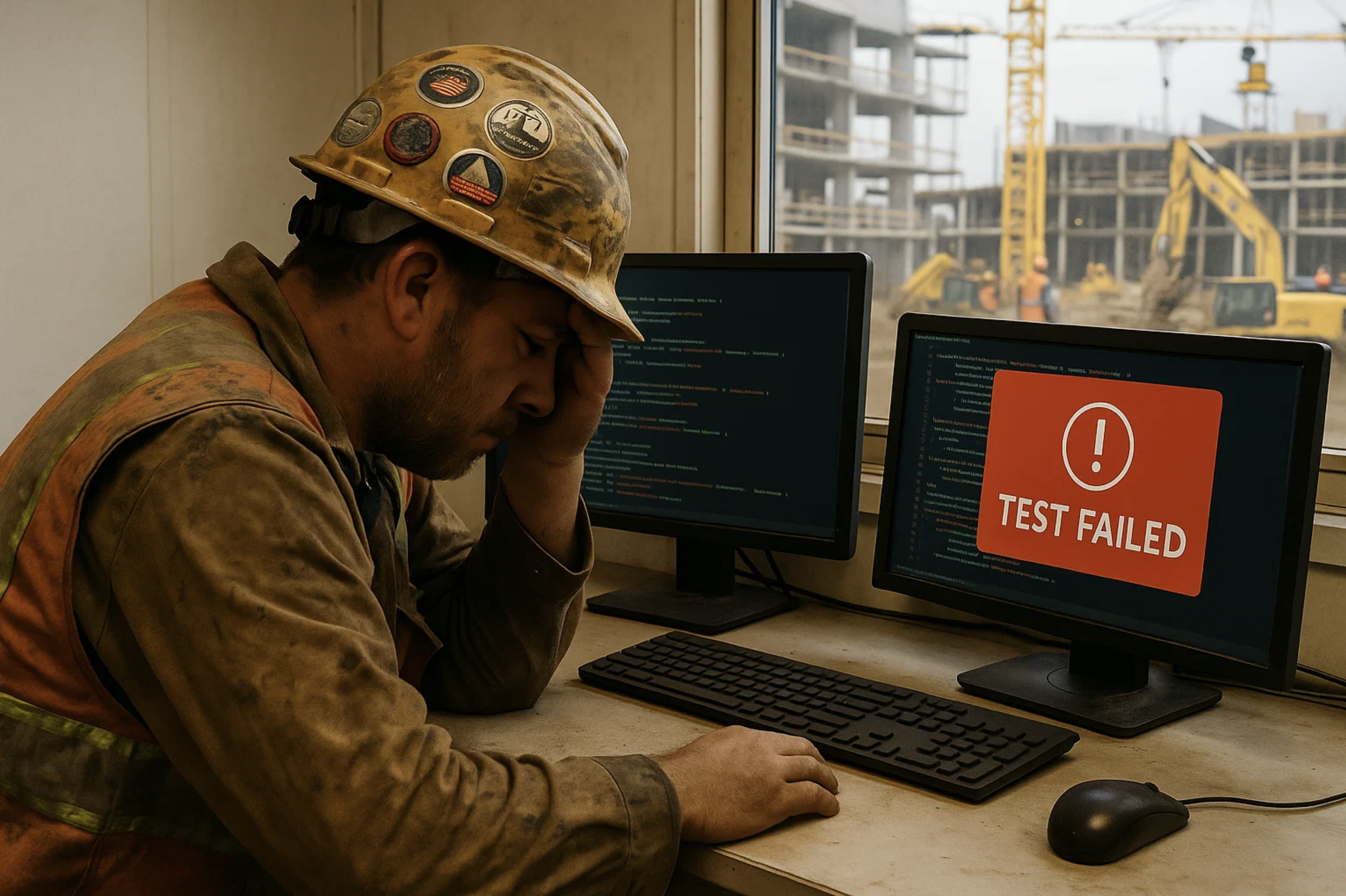
In the Great Tech Debate of Build vs Buy…Is It Too Much to Ask for Both?
In a world that’s ripe with questions surrounding the buzziest of buzzwords, like “Should we use AI?” or “Will robots replace field crews?” there is a totally different topic that still reigns supreme.
Do we build our own construction software OR do we buy something off the shelf?
I have lived both sides and seen the pros and cons from every angle. But in my opinion, it’s the wrong question.
The Difference Between Reactive and Proactive Project Management
Let’s have a brutally honest moment here.
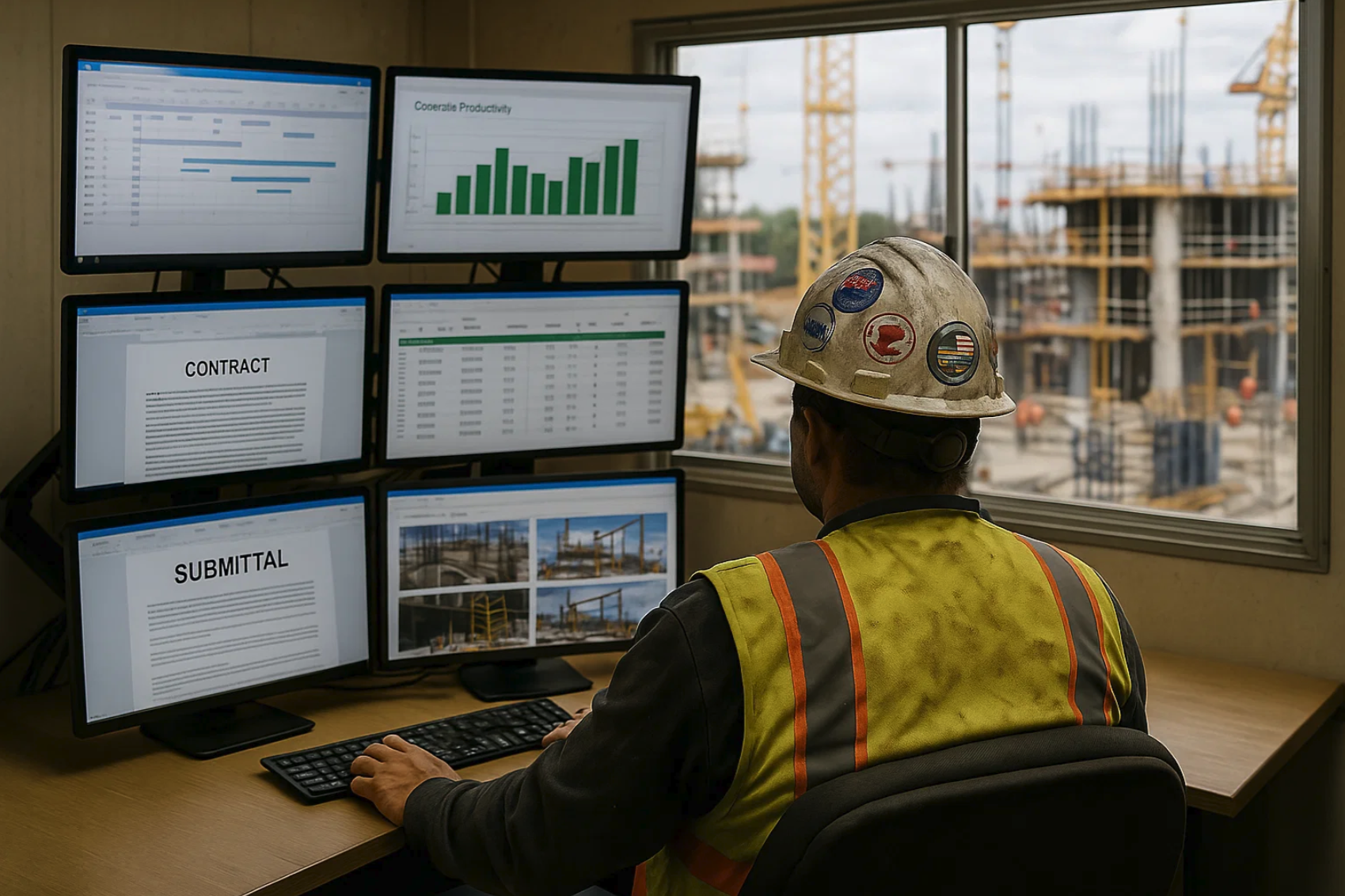
We’ve been talking about big data in construction for the better part of a decade now. Every conference, every panel, every sales pitch is all about dashboards, KPIs, predictive insights and “data-driven decisions.”
But here’s the uncomfortable truth: most contractors don’t actually have big data. But it’s not their fault.
When Alignment Fails…and We’re Too Proud to Admit It
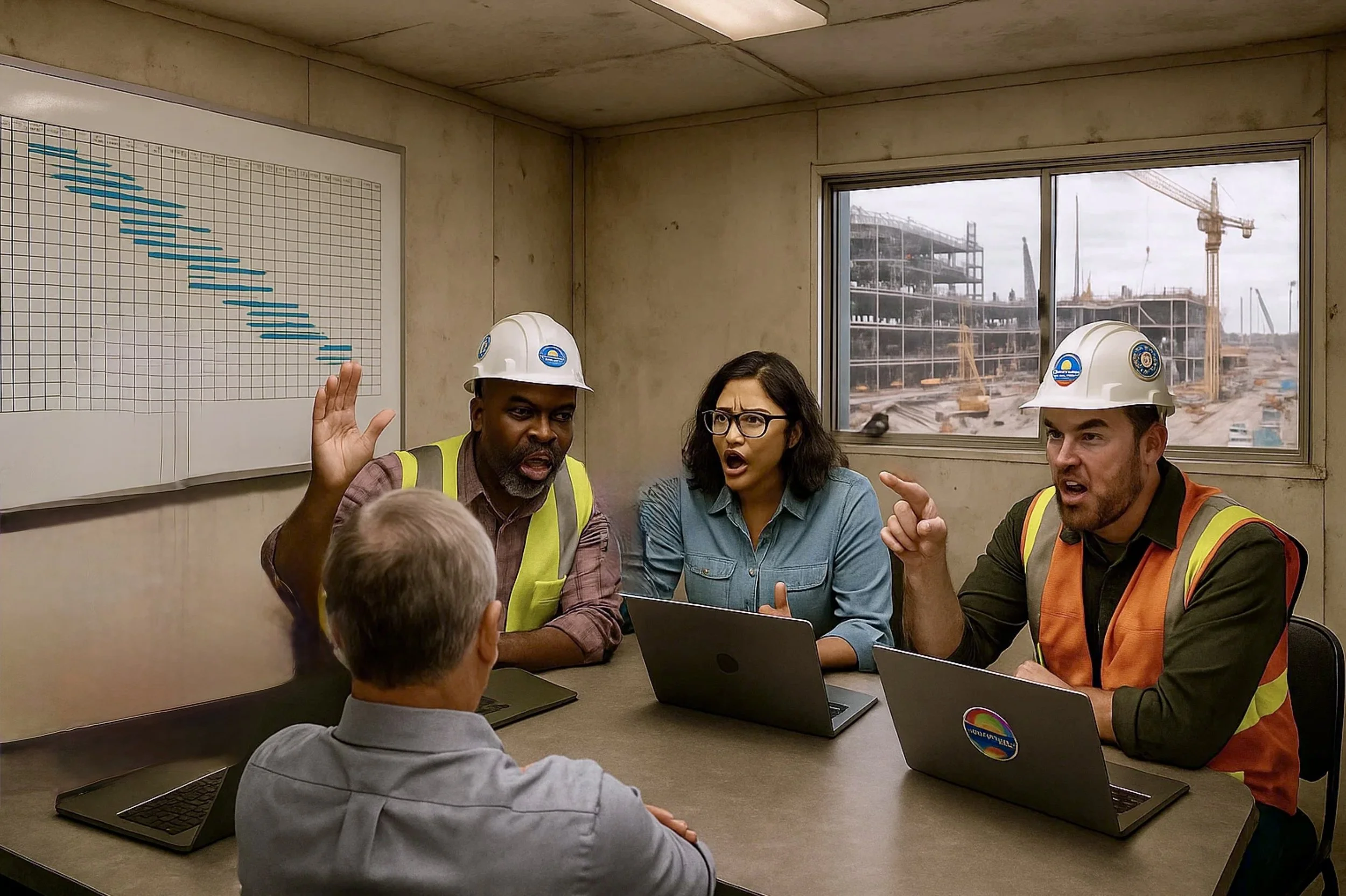
A few weeks ago, I made the bold statement that digital transformations fail due to a lack of alignment between those leading the change and those affected by it.
This week, I’ll prove it to you with a story about the time I watched a multi-billion-dollar tech company totally botch their tech.
But more importantly, we’ll talk about the lessons learned and how you can avoid a similar fate.
When Business Change Management Fails… It’s Not the Tech. It’s Us.
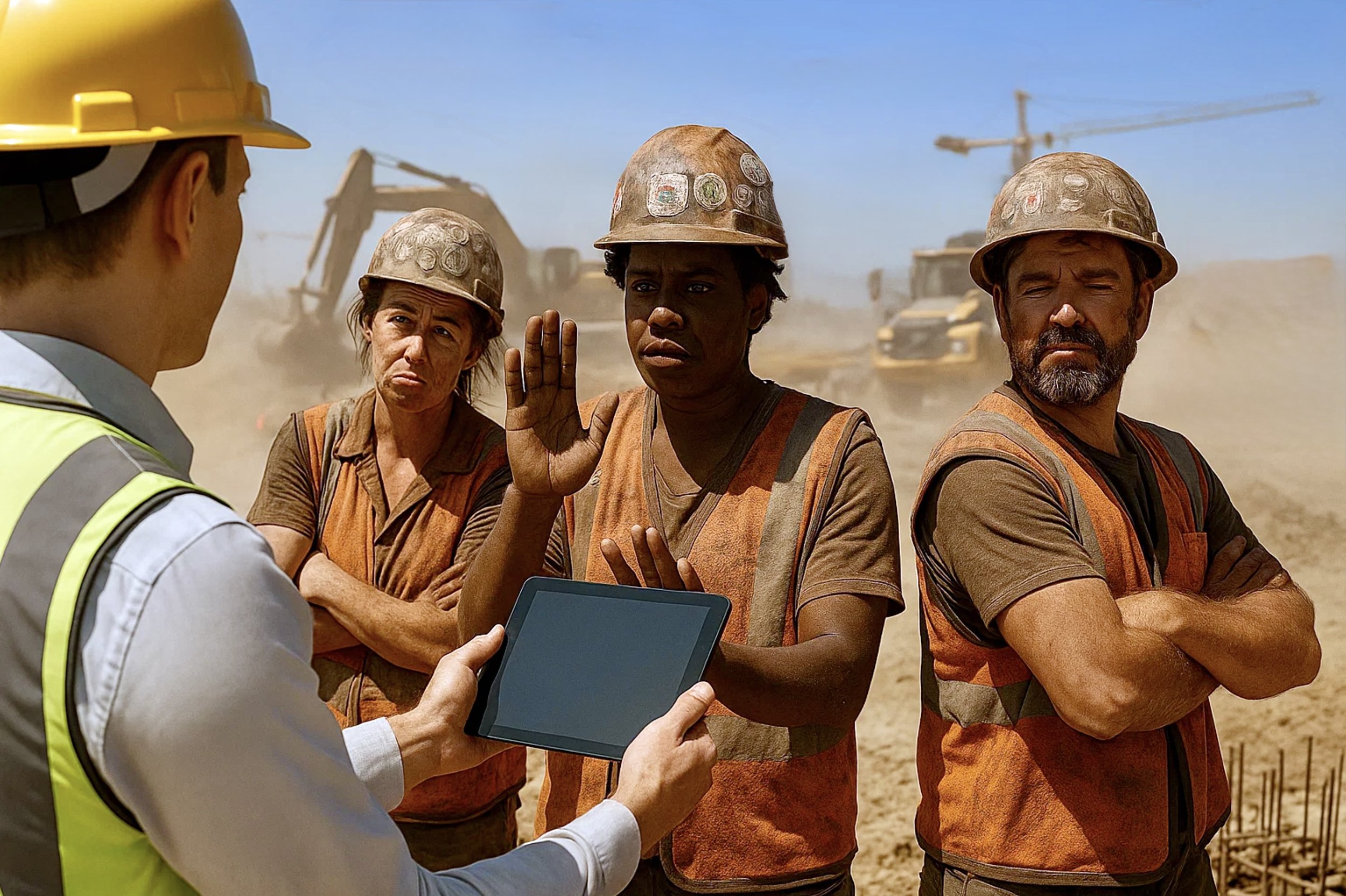
When a digital transformation fails (in construction or otherwise), it’s almost never because the technology didn’t work. It’s because we (those tasked with executing) didn’t lead the change well.
Construction doesn’t have a tech adoption problem. It has an alignment problem.
Let’s get specific…
7 Reasons ConTech Implementations Fail (& How to Fix Them)
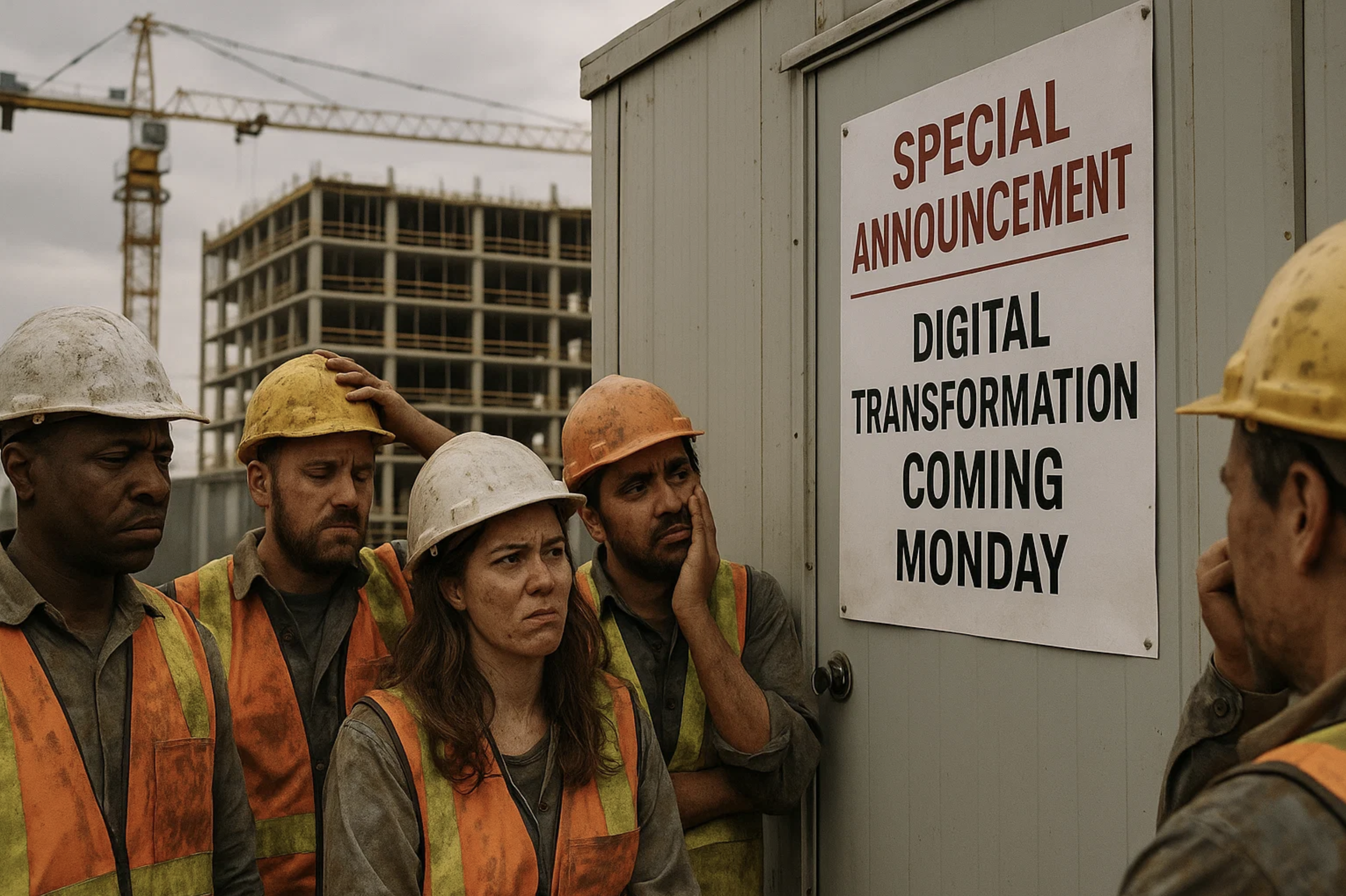
Let’s be honest: implementing technology in construction feels a lot like trying to run new electrical in a 100-year-old building. You start with high hopes, realize the wiring’s a mess, blow a few fuses and end up questioning all your life choices.
Trust me, I’ve been there.
But here’s the deal, construction needs this. So, here are the top seven reasons why construction tech implementations struggle, in my opinion. And more importantly, how we fix them.
