Leaders Carry the Weather
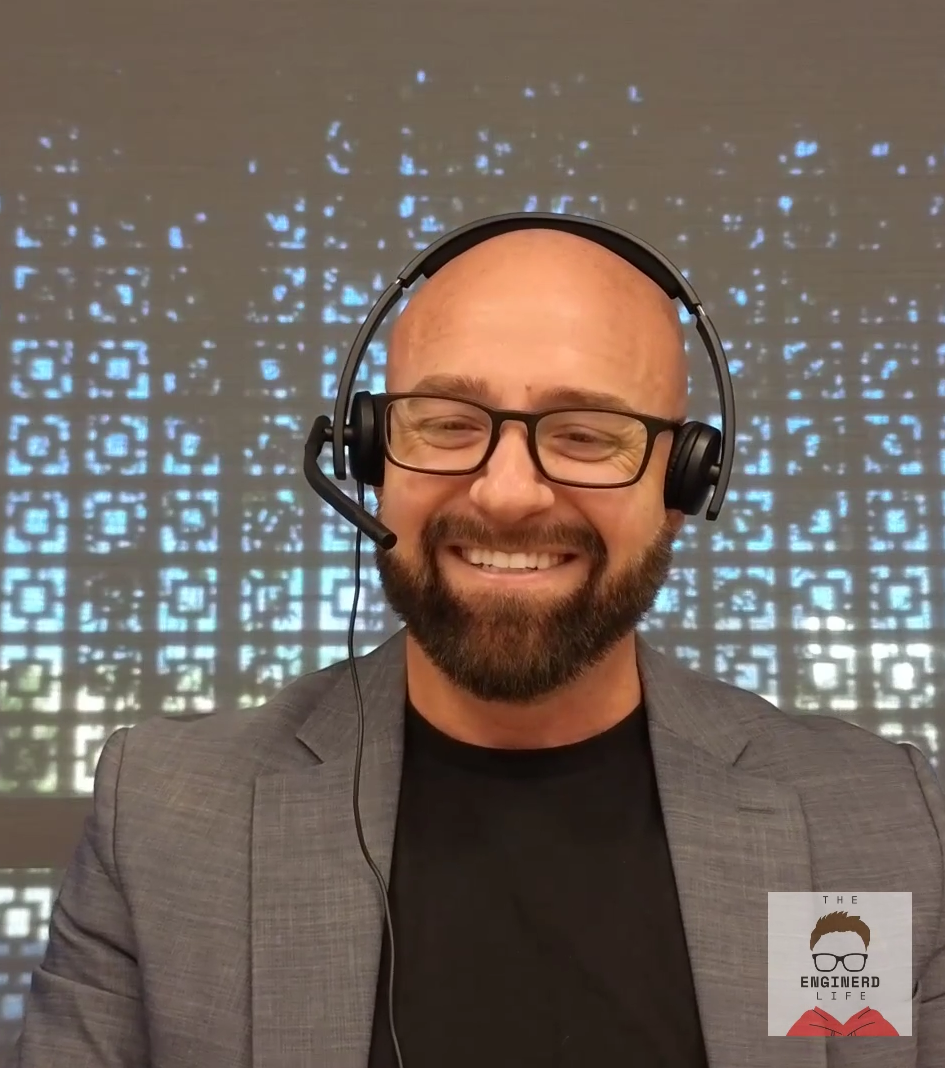
Eli Embleton, a man I hope to see speak live again soon after missing the opportunity to meet him at CII in July of 2025.
Every jobsite has a weather system, and most of the time it walks in wearing the leader's boots. The superintendent shows up hot and the whole trailer tightens up. A project manager walks in steady and the room exhales a bit.
Construction spends a fortune forecasting rain delays and yet totally misses forecasting the storm we bring right in the front door ourselves.
Enter Eli Embleton, a man with a title most of us have never heard. He is Dream Manager at Zachry. But he's also a coach, speaker, author, and martial artist who has trained military units and first responders to stay calm under pressure. So one may assume that’s where he developed the unique superpower of helping people move beyond survival and into connection.
But in reality, he first had to learn to do it for himself.
When Calm Wasn't Enough
Eli built a reputation on staying calm under pressure. Then one morning he heard his wife scream. A man with a knife had attacked her in their front yard. Eli chased him down, subdued him and held him at bay until the authorities showed up.
The training worked exactly the way it was supposed to.
But nobody trained him for what came after. His family was traumatized, and he was watching them suffer with no idea how to fix it. He lost his job staying home to protect them. He was angry all the time, hypervigilant and exhausted. He stopped dreaming about the future because he couldn't see past tomorrow. That's survival mode, and it nearly cost him everything.
Then came a sobering question: who could you be if you forgave the man who did this?
Not for the attacker's sake. For his own. Two weeks later, back in construction as an entry-level employee, he was asked to become the company's dream manager. His job was to sit with people one-on-one and ask what they wanted out of life, at a time when he still wasn't asking himself.
The Instinct Trap
Eli has a special name for what he lived through, and believe it or not it shows up on every project in the country. He calls it the “instinct trap.” When we feel threatened, instinct takes over and hands us a short menu: fight, flight, freeze or withdraw. That's useful when there's an actual knife. It's a disaster when the threat is a superintendent yelling in a coordination meeting.
Why consider this a trap? Because this instinct narrows our options. The brilliant engineer who feels unsafe goes quiet, and all that brilliance goes with them. The veteran foreman who gets backed into a corner loses access to every skill that made him valuable. And all the while the leader watching it happen usually chalks it up to attitude, laziness or disengagement.
The crazy thing though, as Eli points out, is that the leader is often caught in the same trap. They’re working to protect status by telling themselves a quick story about someone else’s situation. Sometimes the story is right, but often it isn't. And the only way to know is to listen a little longer than feels comfortable.
Not hours longer, but just long enough to hear what's really going on.
The Classic “Don't Bring Me Problems” Example
For example, Eli shared a story many of us have heard in one form or another. At a training, a leader had the room repeat a mantra: don't bring me problems, bring me solutions. Sure, they meant well. It’s a long standing “formula” to get people thinking like leaders.
Then Eli listened in the lunch line. What the field heard was simple: if you have a problem, keep it away from leadership. A slogan that was meant to build ownership was really teaching people that raising an issue made them weak. Same words, totally opposite message.
What’s even more interesting is the same thing happens with stop work authority. We hand it out, train it and even print it on cards. Then someone actually uses it and gets a sideways look or an eye roll, and every person watching learns what the policy actually means.
Culture is never what we put on the wall. It's how people feel the moment they bring us something hard.
Muscular Vulnerability
As we all know, construction runs on toughness. Eli isn't asking any of us to give that up. But he does have an alternative to the overwhelming grit that is weighing on our teams.
He calls it muscular vulnerability. In Eli’s opinion, we’ve long confused vulnerability with disclosure, oversharing the hard stuff. But real vulnerability is wanting something more when it could be taken away. It's an owner opening a company meeting by admitting he nearly bankrupted the business two years earlier. It's a leader saying he misjudged the situation.
Eli calls this reaching instead of retreating, and he's not shy in admitting that it's risky. You can offer connection, but you can't force it. The other person still gets to choose. That's exactly why most leaders retreat instead.
But invulnerable people don't ask for help, don't say what they want and eventually don't stay. In an industry that can't find enough people, belonging isn't soft. People who are more engaged in their own lives bring more of themselves to work.
And as we all know, our people lift their game when the leader goes first.
Return to Center
So how does a change start tomorrow? Eli's answer is almost too simple.
Breathe.
Five and a half seconds in and five and a half seconds out. It's not a wellness trend, it's taking control of the one thing you always control. When police walk into chaos and shout "calm down," nobody calms down. When they bring the calm in with them and invite people to match their breathing, the room follows.
Think of it like a hurricane. From the center of the storm, you can see the patterns swirling around you. Then you can ask better questions. Questions like “what am I protecting right now?” and “is there another story about this situation that could be true?” Both are clear reframes of the accusatory gut reaction of “why did you do that?” that often bursts forth when we’re off center.
Breathe, observe, ask. None of it costs a dime, and every bit of it works. In fact, it works just as well at the kitchen table as it does in the job trailer.
Every leader carries the weather onto the project. Make sure your people see the calm in the center of the storm, not the storm itself.
Construction is cool, tell your friends!