The Expertise You Need Is Already in the Room
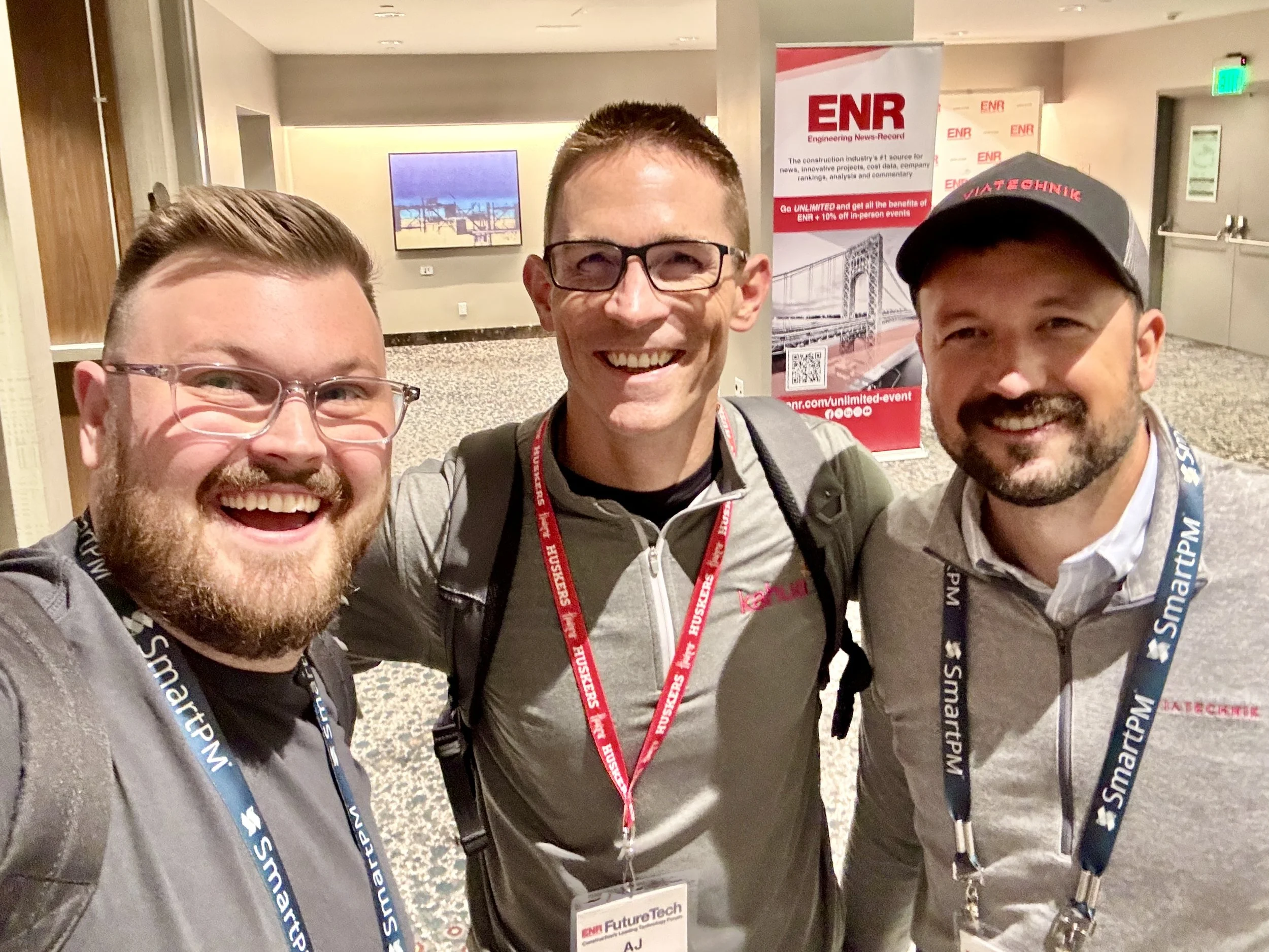
With Stephen Poppe (right) and Tyler Campbell (left) at ENR FutureTech in San Francisco May 5th, 2026.
There's a version of construction that seems to assume the biggest gaps we still face on the jobsite are technical. Missing software. Missing integrations. Missing data.
But in reality, the gap is much simpler than that. It's the expertise sitting in someone's head that never makes it into the conversation. Not because it wasn’t known, but rather because nobody asked, or worse because the room wasn't built to hear it.
Blindsided By a Tough Lesson
Early in his career, Stephen Poppe was handed a job most people would call thankless: roll out a "flow and problem prevention process" on a jobsite (think an early cousin of Last Planner). Now Stephen didn't come from engineering. In fact, he'd studied business econ in school. But what he had was the ability to ask questions and moderate a room.
The whole plan looked airtight on paper. One plus one equals two. Better process, better outcomes. Just execute.
Then it didn't work (shocking, right?). Plan percent complete stayed low. People stopped showing up to meetings that needed them. And instead of stepping back to ask what was missing, Stephen and the team did what was always done and leaned in on pressure. They pushed harder on people who'd been running work for decades before they ever set foot on a site.
That’s when a superintendent pulled Stephen aside and told him, flatly, that if he didn't change his approach, he'd be asked to leave the trailer.
That's the moment many of us can relate to early in our careers. But if you look closely, it’s not just about being humbled, we all get that. What’s really worth sitting with is what this lesson exposed for Stephen and the team. The process wasn't broken, the forum was.
Nobody had built a room where the people with the real expertise were invited to share it
Expertise Doesn't Live in Systems. It Lives in People.
That’s the whole idea, right there. The best tech and the best process mean nothing if there's no forum where humans actually want to contribute what they know.
And that's not a knock on technology. Rather it's a correction to sequencing. Tools capture information once someone decides to share it. They don't create the willingness. That part is still human, still slow, still built meeting by meeting. And for some odd reason, it's still the part most transformation efforts skip past on their way to the dashboard.
When you consider “silos” in this light, they aren't really a data problem wearing a technology costume at all. They're a trust problem that happens to show up in disconnected systems. And finding that real problem, not the symptom sitting on top of it, takes so much more than good instincts.
Finding the real problem takes structure. It takes asking the third question, then the fourth, then the fifth, past the point most conversations stop. It means separating the science of a situation from the art of it: the schedule and the design status are the science; what isn't being said and what behaviors are shaped by culture is the art. The best operators in this industry (the ones who can walk a set of drawings and then walk a trailer full of personalities with equal fluency) are rare precisely because most people only train the first half of that skill.
Why Construction Still Lacks Trust
Ask why construction struggles to be transparent, and the honest answer isn't malice. It's traffic.
Stephen explains it like this, picture a highway where every driver trusted every other driver to hold their speed exactly. No slamming brakes, no surprises. There would be no need to leave a buffer between you and the car in front of you. But none of us are silly enough to trust that, so we all leave a gap. Construction is the same, and our budgets get a little padding. Schedules add some slack. Numbers get softened before they travel up or down the chain.
Those buffers aren't dishonesty. They’re a rational response to an industry where variability is the norm and surprises get punished. The GC negotiating a GMP without finished design isn't hiding the ball, they're protecting against the six-month slip nobody saw coming, mainly because somebody upstream wasn't fully forthcoming either. And the same dynamic repeats at every layer of a project team, not just between owner and contractor. It can be the corporate office to the project, the office trailer to the field, even field leadership to the crew.
Not a one of them withholding information because they're dishonest. Instead, withholding information because the last surprise cost them something.
That’s why the real fix isn't a policy demanding more transparency. It's removing the reason people feel they need the buffer in the first place. That starts with leadership that actually models openness under pressure, and it deepens when incentives stop being misaligned. Every seat on a project (the sub, the GC, the super, the owner) is all too often optimizing for a different definition of success.
But it’s the rare companies, the ones where everyone's incentive ties back to the same bottom line, that consistently report something the rest of the industry treats as fantasy: people who actually lean into change instead of guarding against it.
Be the Hub, Not the Bottleneck
So what does someone do with this on Monday morning, standing in the middle of a project that feels exactly this disconnected?
Simply put, stop waiting for authority to fix the flow of information. As Stephen would say, zone of control still applies at every level, regardless of your title. The proper move is to become a hub, a reliable source of signal instead of noise, someone who gathers what's scattered across a project and makes it usable for whoever's downstream. It’s a skill construction seems to still be bad at collectively.
And it matters more now than it used to, not less. As a new generation enters the industry, they won't tolerate the sink-or-swim onboarding we all had to survive. Meanwhile, the industry's ability to capture what's currently stuck in veteran heads will decide how fast that generation actually becomes useful.
Every project already has the expertise it needs to succeed. Most of it is sitting in someone's head, waiting for a room worth talking in. The question worth asking then isn't whether your team has the right people.
It's whether you've built a room they actually trust enough to say what they know.
Construction is cool, tell your friends!