When Nothing Happens Equals Job Well Done
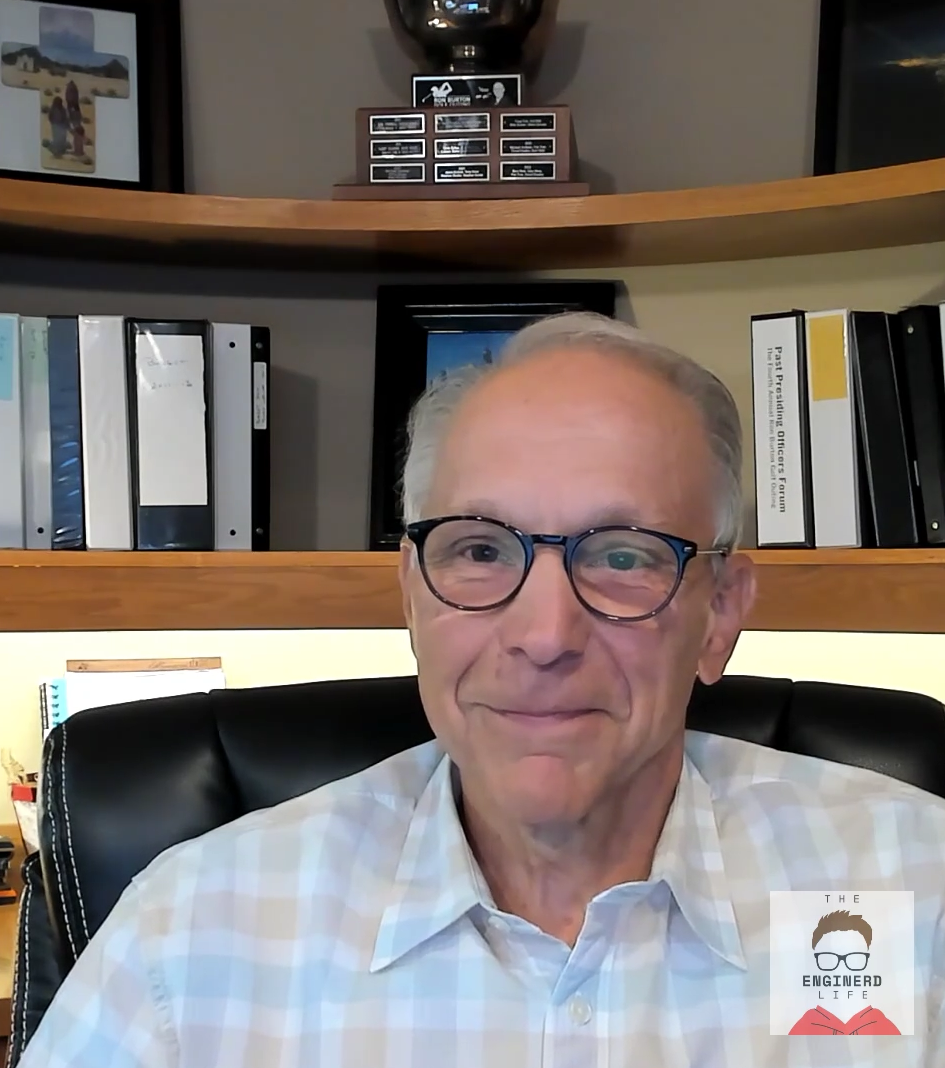
John Belcik, CEO of ICC and a gentleman I truly hope to shake the hand of some day soon.
There's a joke inside the International Code Council. John Belcik, the organization's CEO, tells it like it’s nothing. Like it wasn't the whole point.
"We've done our job when nothing happens."
Let that sink in for a minute. An entire organization, made up of 70,000+ members and 400+ chapters, with a three-year revolving code cycle, is built around a definition of success that looks, from the outside, exactly like failure to notice anything at all.
Nobody walks into a building and checks whether it's going to fall down. Nobody thanks the code official on the way to their desk. We just trust that the building will simply stand there. The elevator just works. The roof holds back the snow. And the moment you stop noticing the system is the moment the system has done its job perfectly.
That's the trap of every system that actually works. Invisibility isn't the absence of effort. It's the receipt for the efforts that nobody sees.
Remove Yourself From The Outcome
Believe it or not, the ICC doesn't actually write building codes. They administer the process that produces them.
That's not a technicality. That's the entire architecture of trust.
As John explains it, each code deals with proponents and opponents, public hearings, committee reviews and essentially years of debate, and then the final vote lands with regulators. What is noticeably missing from that equation? The builders. The material suppliers. Basically anyone with a financial stake in the outcome. The key is, the people who cast the deciding vote are the only stakeholders in the entire room who have nothing to gain either way.
Think about how rare that is. Most systems we trust (ratings, reviews, certifications, even "independent" consultants) have a thumb on the scale somewhere, usually the thumb of whoever benefits from the answer. ICC built the opposite on purpose: due process without bias, consensus over authority, transparency as the mechanism, not the marketing.
You don't build trust by being right. You build it by removing your own interest from the decision.
Codes Are Grief, Converted Into Action
There’s an old joke about warning labels. You know, like “caution hot” on a cup of coffee. Somewhere someone tried whatever the label warns against. But every code rule you've ever rolled your eyes at likely started much worse. It likely started as a funeral.
The Great Chicago Fire. The Iroquois Theater fire. The 1906 earthquake. Champlain Towers. Every disaster gets studied, and what failed becomes the next line item in the code. That's not about more bureaucracy. That's an industry doing the only decent thing left to do after tragedy strikes, making sure it only strikes once.
John has a very specific story he likes to reference about a young couple. Not engineers. Not architects. Not anyone with a professional stake in the code process. Just a couple whose seven-year-old son was killed by a four-hundred-pound gate at a school playground.
They didn't just grieve. They formed a nonprofit. They wrote a code change. They took it through ICC's public process (the same process open to anyone willing to show up) and it passed. Thankfully, it will be in the 2027 model codes. Kids at schools they will never visit, in states they will never live in, are safer because two parents turned the worst day of their life into a permanent fix.
That's the part of the system nobody sees on the news. The code book isn't a stack of restrictions. It's a memorial that happens to also be functional.
The Cost Argument Doesn't Hold Up
It's easy to blame codes when a project runs over budget. In John’s eyes though, that’s simply an easy target. And as any good construction professional would, he brings the math to prove it.
A University of Alabama study looked at 2.7 million home sales across three code cycles: 2018, 2021 and 2024. After digging into all the details, they found no measurable link between new code adoption and higher home prices. Not even a soft correlation. There is simply no discernible link at all.
And that matters. The construction industry is under real pressure right now with labor shortages, technology shifting, supply chain volatility and increased speed to delivery and the codes are the easiest thing to point at when none of those pressures have an easy answer. But blaming the safety net for the weight of everything else isn't an argument. It's a scapegoat with good timing.
The truth is simpler: the codes aren't what's slowing us down. And the industry that keeps looking for something else to blame will keep missing the thing it should actually be fixing.
What Are You Tolerating That You Could Just...Fix?
So here's the challenge underneath all of this.
That young couple above didn't have credentials. They didn't even have a seat on a committee. All they had going for them was a problem coupled with a process willing to hear them. Add in a little resolve to walk through it all and you have a winning formula for change.
Anyone can submit a code change. Anyone can call ICC for a free interpretation. Anyone can join a membership council. The barrier to participating in the system that keeps building occupants safe is lower than most people assume. But it’s also higher than most people are willing to try.
So the question isn't whether the codes are perfect. They're not. Even John would tell you that himself.
The question is more about what you’re currently tolerating (a gap, a risk, a "that's just how it's always been") that you have the ability to actually go fix. Not just complain about. Not just post about. Actually fix, through the process that exists specifically so people like you can.
What would you build into the next code cycle if grief, or frustration, or just seeing the problem clearly, was reason enough to start?
Construction is cool, tell your friends!