The Grain Doesn’t Lie
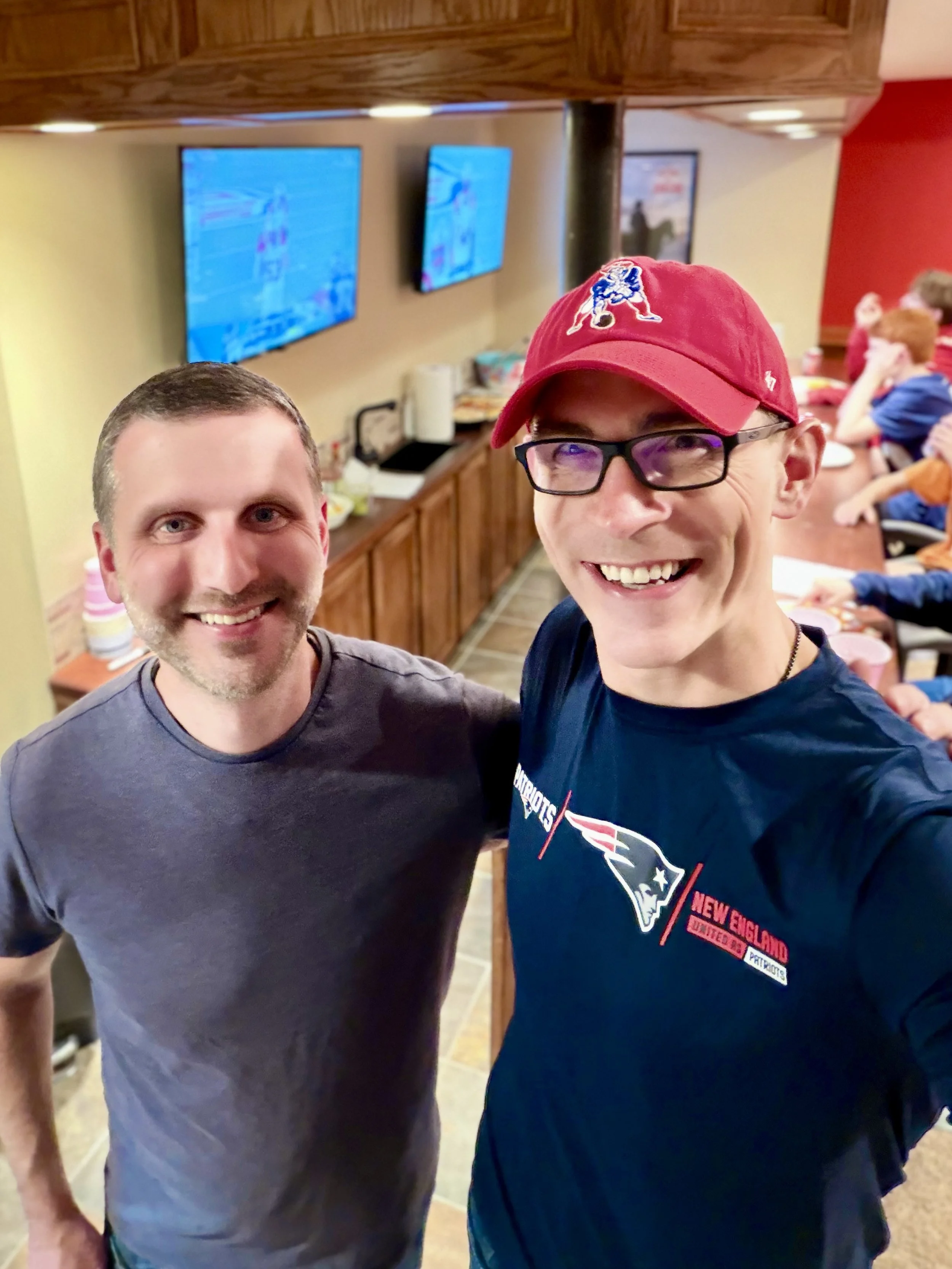
With Mark Anderson for the Super Bowl debut of the bar on Feb 8, 2026.
The client (and friend) had signed off on everything. Dimensions, colors, schematics, the whole plan agreed to before the first cut. Then progress photos went out along the way, allowing for feedback at every stage. By every visible measure, this build was on track.
Delivery had been a success. But the text came a few days later: this isn't what we wanted.
Nobody had lied. Nobody had skipped a step. They simply hadn’t known what they wanted until they saw it finished. What was agreed to on paper had gotten mistaken for alignment in reality.
Pastor Mark Anderson still thinks about that project. Mark is a builder, off the clock and on, and has an incredible knack for molding stellar creations out of whatever he is handed. That takes patience. Not the passive kind. The kind that builds projects people love and helps people through the worst seasons of their lives, using more or less the same method. He also happens to have built the bar sitting in the background of our photo, along with the office set seen in every other episode of the show.
But there’s a lesson in his patience, and it’s a lesson construction could definitely use.
Material Doesn’t Care About the Plan
Before a tool ever gets touched, there's a plan. Dimensions, colors, schematics, sign-off. Everything on paper, agreed to.
Then the first blade cuts into the wood.
And the wood doesn't care what was on the schematic. It splinters where it wants to. It bows in a direction nobody planned for. It won't stain the way the sample board promised. A remodel can be spec'd on paper all day but the second that blade goes in, the plan stops mattering. What's actually in front of the builder is what gets built.
That's exactly the gap that drowned Mark’s project. With every cut, every step forward, there is a call for the same patience. You have to pause long enough to see what the material is actually telling you before assuming the plan still holds.
People Splinter Too
What does that have to do with leading people in construction? Mark's take: people are exactly the same as the wood above. Open someone up (a hard conversation, a rough season, a blowup on site) and they don't bend the way anyone expected either. Sometimes they shatter instead. There's no schematic for a person, any more than there's one for a board of walnut. Nobody knows what they're working with until they're already working with it.
Many of us in construction have a knack for fixing things. We’ll take a technical problem over an emotional problem any day, because it’s comparatively easy. A gear breaks, it gets replaced. A belt snaps, it gets replaced. There's a schematic, a manual, a clear line from symptom to fix.
People, on the other hand, don't come with one of those. And a person's problem is rarely minutes old. Often it's weeks, or even years. A trauma, an indecision nobody helped them make, or a decision someone else forced on them that they're still living with. That's exactly why troubleshooting equipment feels so much easier than troubleshooting each other.
And this is where most people (especially us natural “fixers” in the room) go wrong. A person's bad day gets treated like a broken gear: find the part, replace the part, move on. But Mark's point cuts deeper than that. That discomfort of watching someone struggle isn't really about their problem, but rather it's our own itch to make the discomfort go away.
Borrowing a line from a book, Mark cautioned before jumping in to simply ask which role is actually needed. Listener? Solver? Just being present? With the tendency to default to solver, every time for everything, the power in patience gets missed. Sometimes all someone really needs is to be heard. Hand them a solution instead, and nothing really gets fixed at all.
Learn to Fail, Then Fail to Learn
Mark's mantra for all of this, whether it be in his projects, his ministry or his leadership, is simple: learn to fail, then fail to learn. No shame, just data. The disappointed client didn't just teach him a lesson about writing better specs. It taught him that silence doesn't always mean understanding, whether the relationship is with a client or a crew.
Every piece Mark opens up now gets treated the same way. Not "what can this get forced into." Instead: "what's actually already in here, and how does the work go with that instead of against it."
That's the whole idea. Don't force it into the plan. Find the grain, and build with it.
But, you say, construction runs on speed. And that speed equates to competence. Patience, hesitation, they’re viewed as weakness. We strive to finish early, move to the next project, make more money. And nobody's wrong to want that.
But speed is always a bet, a bet that nothing underneath the surface is going to surprise us. And when we’re talking about people, that bet rarely pays off. A five-minute check-in before a shift isn't really about being nice. It's about being human. And while it may feel uncomfortable in the moment, it’s a protection against what could become something much worse because nobody asked what was actually going on.
Skip that check-in enough times and the loss isn't just information. It's the trust that makes people willing to tell the truth the next time something's wrong. In an industry already bleeding people to burnout and labor shortages, that trust isn't a soft metric. It is so much better, every time, to keep an experienced person through a hard season than to replace them once they walk out.
Everyone Has This Kind of Power
At the end of the day, Mark offered a subtle reminder to whoever thinks they don’t have a say on the project. Whether it be the new hire, or simply one still without a title of any kind, you can do this. You might be a "peon" for years, but peons are the ones who actually get things done. They're the ones with hands on the tools every day, the ones who know what the people are going through each day, not just how it gets reported in a meeting.
And that's real authority, earned in the field, that doesn't wait for a title to be legitimate. That’s the kind of relationship that, with just a little bit of patience, can uncover the hidden beauty in the grain beneath.
As said before, every job site has a spec just like every relationship has assumptions baked in before the first real conversation happens. Reading the grain isn't an argument against being prepared, but rather a warning against mistaking the plan for the material.
So when you encounter a subtle shift in perspective, have a little patience. Instead of building off the schematic, simply pause to take a moment and see which direction the grain is actually going.
Construction is cool, tell your friends!