We’re Actually on the Same Side
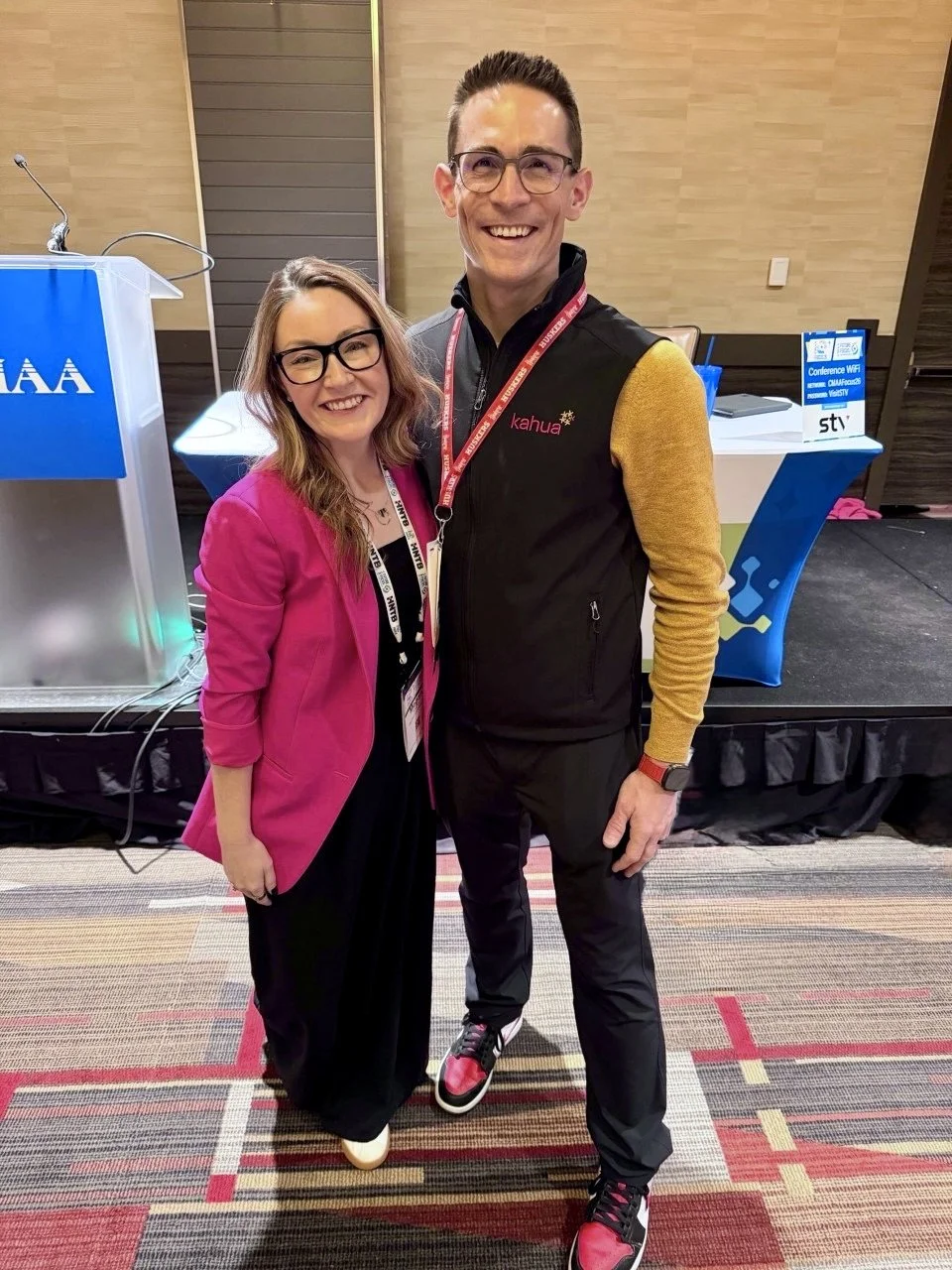
With Megan Shapiro at CMAA Focus in Las Vegas on Mar 9, 2026.
In construction, the contract has become a secret weapon. A document where the language and the clauses can land you on the wrong end of a court decision. But in reality, the contract isn't where the fight starts. It's where the relationship starts. We just keep treating it like the former.
That’s why, when you ask construction contracts guru Megan Shapiro of Radoslovich | Shapiro, PC what "leverage" means to her, you won't get the answer you expect. It’s not bargaining power. It’s not even who's the bigger company in the room. No, Megan defines leverage through partnership.
The owner wants the building built. The GC wants the building built. The trade contractor wants the building built. The supplier wants the building built. Everyone in that contract is aligned on the same outcome before a single clause gets negotiated.
The system pits us against each other at certain phases regardless (negotiation being the obvious one) but Megan's point is that this doesn't have to mean adversaries. It simply means people temporarily on opposite sides of the same shared goal. When you approach a redline from that place, a request to change contract language stops being an attack. It's two people trying to get to the same building, faster and with less pain.
That sounds simple, right? Except it's almost never how it actually plays out.
The Old Playbook
Much of this is a relic of the old days of construction, the version where every conversation was a “pissing contest,” where leverage meant who had more bargaining chips, and where GCs handed subs a contract with an unofficial rider attached: no redlines accepted.
“Take it or leave it,” the saying would go, “there are twenty other subs behind you.”
Trade contractors internalized that fast. They've got crews to keep employed, families depending on that crew and a business to keep afloat. So when the choice came down to signing an unfavorable contract or pushing back and risking the job entirely, most people would sign. Not because the terms felt fair. Because the fear of losing the work outweighed the fear of what the terms might eventually cost.
Thankfully, Megan's seen the industry move away from this over the last fifteen to twenty years, genuinely. But the instinct doesn't disappear just because the culture starts to shift. It survives in the clauses nobody questions and the redlines nobody sends.
When the Weapon Gets Used
At some point, this all stops being theoretical. In fact, there is a clause that makes Megan’s whole body react in a viscerally upset sort of way. It's called a cross-default provision, and it's trending in exactly the wrong direction. She used to rarely see it. Now it's in almost every subcontract she reviews.
The mechanics are simple and brutal: if a trade contractor has multiple projects going with the same GC, and a dispute breaks out on Project A, the GC can withhold payment on Project B. And Project C. And so on. Those other projects, with crews that showed up, did the work, and have nothing to do with whatever went sideways elsewhere, are punished anyway.
Megan has seen clients nearly go out of business because of it.
That's what happens when a contract gets used as a weapon instead of a foundation. It doesn't resolve the actual dispute any faster. It just gives one side a way to apply pressure everywhere at once, and it teaches the other side, permanently, that the relationship was never really a partnership to begin with.
The Cost of Silence
What is most difficult for Megan to understand though, is that many of these scenarios are avoidable. Starting as a litigator, fighting battles in the courtroom after the lawsuit had already been filed, she noticed over and over the same disputes kept happening. But worst of all, almost every time they traced back to contract language nobody had questioned when it mattered.
Her clients could have called her when the contract first landed on their desk. That conversation would have cost them a couple hundred dollars. Instead, most people signed, because "we all do them the same way," and a year later it was a hundred-thousand-dollar problem she was now fighting in court.
Pennywise and pound foolish, she calls it. The other way to look at it is a tax on fear. The price of staying quiet instead of asking the question that might have protected the relationship in the first place.
Choosing the Relationship Instead
So what does it actually look like to build a contract on partnership instead of leverage-as-weapon? Megan's method starts before a single redline gets drafted. She calls it the vibe check: read the entire contract once, start to finish, and pay attention to how it feels.
Balanced? Lopsided? Does it read like both sides are carrying risk, or like you're the only one holding the bag?
That first pass isn't about catching every clause, it's about catching the shape of the relationship you're about to enter.
But then comes the harder part, talking about what you find. Here Megan's advice is almost disarmingly simple, ask a question instead of making a demand.
"I've read this clause a few times and I'm still not totally clear on it, can you walk me through how you'd interpret it?"
That question costs nothing and puts nobody on the defensive. Worst case, the other side shrugs and admits they've never read it either. Best case, you've just opened a real conversation about a real risk, and neither of you has reached for the "we'll just go with the next guy" card.
What You Get When You Choose It
Here's the thing, we talk about risk, schedule and margin constantly in this industry. We almost never talk about the stress that builds when every project starts from a posture of protect-yourself-first. That’s why Megan's answer to what changes when teams negotiate honestly up front wasn't about better contract language at all, it was about trust. Every project eventually produces some version of a dispute. The difference is whether that dispute plays out inside a relationship you've already invested in, or inside one that was adversarial from the day the contract was signed.
The contract was never supposed to be the weapon. It was supposed to be the first conversation in a relationship that's going to have to survive a lot of pressure before the project’s done. So here's the question worth considering the next time one lands on your desk: are you going to read it like a partnership, or sign it like a truce?
Construction is cool, tell your friends!