The Dinner Party Test
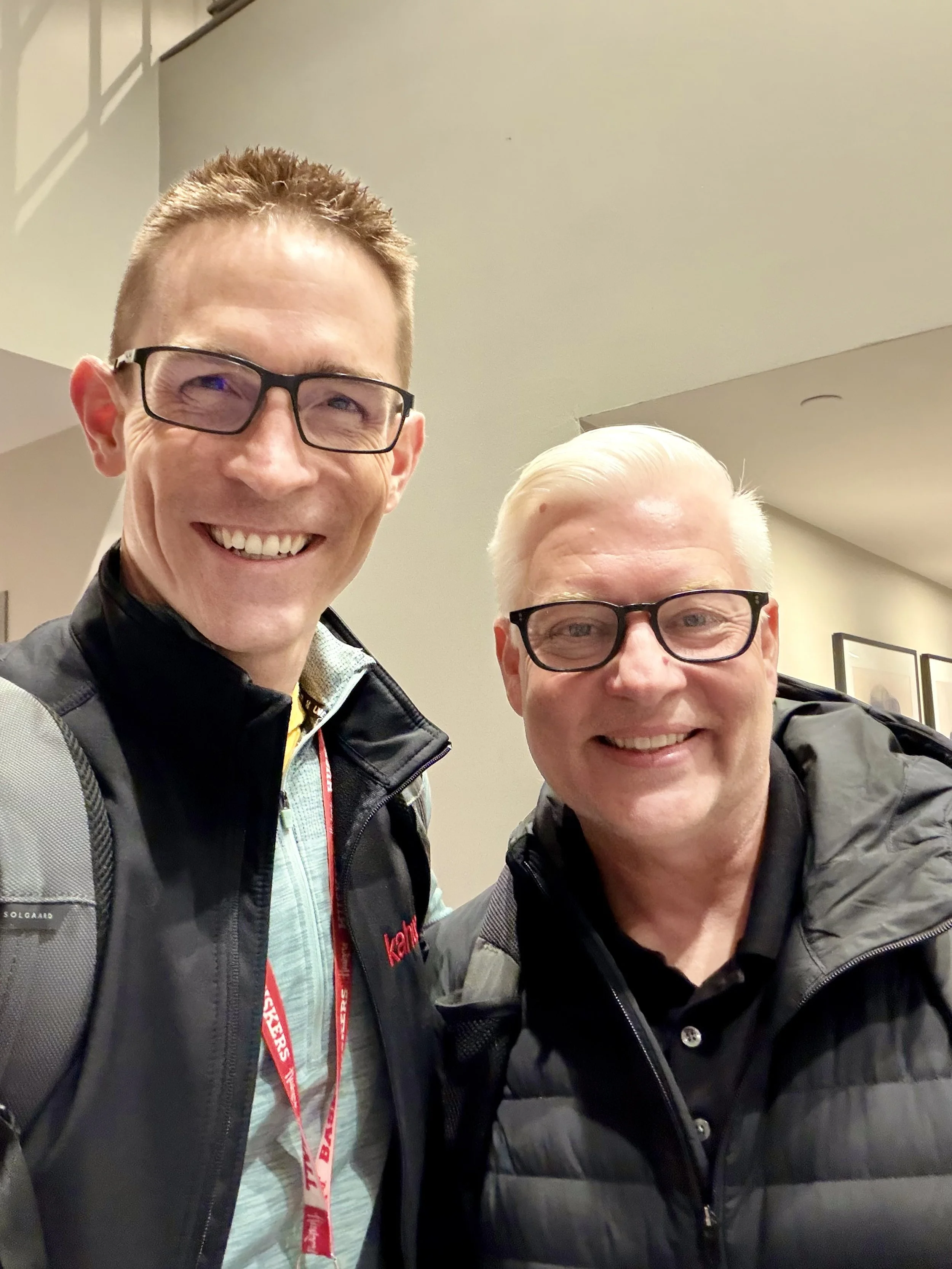
Colin Crook of FractalPR at ENR FutureTech in May of 2026.
There's a moment in every construction technology sales cycle that few are willing to talk about.
The deck is polished. The features are real. The ROI is documented. The case study is live on the website. And yet nothing. No sales. No traction. Each new potential client nods, says "we'll circle back" and then disappears for six months.
The new startup quickly blames the industry. They call it change-resistant. They call it slow. They shake their heads and say “construction just doesn't get it.”
But Colin Crook, founder of FractalPR and one of the sharpest communication minds working in the built world right now, has a different diagnosis. And he delivered it in about thirty seconds flat.
"If you're at a dinner party and someone asks what you do, you wouldn't lead with the top five feature sets of your innovation."
And you know what? He's right. Yet that's exactly what most contech companies do. Every day. At conferences, in LinkedIn posts, in press releases, on website homepages. Fancy feature sets dressed up in glorious buzzwords. Long capability lists masquerading as storytelling. All while the construction industry's BS meter (which is industrial-grade, by the way) is seeing right through it.
The dinner party test isn't just a communications hack. It's a mirror.
The Problem Isn't Your Product
Hang around construction technology long enough, and you get to know the pattern. A company builds something genuinely useful. It solves a real problem on real jobsites. The product works. And then the communication falls apart.
Not because the team is bad. Not because the market isn't ready. But because the message was built for an investor deck, not a foreman's coffee break.
As Colin put it, the construction industry has one of the highest product-market fit sensors in the world. If your technology doesn't solve a true problem, it stays on the shelf. Full stop. No amount of marketing can rescue it. But (and that’s a big but) when you do unlock that fit, construction people are genuinely excited to talk about it. They take videos. They tell their friends. They become your best distribution channel without ever needing to be asked.
The industry isn't the problem. The message is.
And the message fails because we’ve all been trained by fifteen years of B2B marketing culture to optimize for quantity over quality, automation over relationship, feature over feeling. We send a hundred blanket emails instead of ten great ones. We build landing pages for search engines instead of human beings. We compress costs around content production and wonder why it feels empty. And Colin doesn’t mince words.
"People in the construction industry, they don't respond well to that. What they respond well to is authenticity, shared experiences and honesty."
That's no soft observation. That's a real market signal.
Executing the Dinner Party Test
Before you write the LinkedIn post, before you pitch the journalist, before you build the panel abstract, first run your Dinner Party Test:
Imagine you're at a dinner table with someone you've just met. When they ask what your company does, what do you say?
If your answer includes the words "AI-powered," "seamless," "end-to-end" or "digital transformation" then congratulations, you've lost them. If your answer is longer than thirty seconds, same result. If you find yourself reaching for a memorized case study to prove the point rather than just making the point, wrong again. The message isn't ready yet.
Now don’t get it wrong, the Dinner Party Test isn't about dumbing things down. It's about clarity under social pressure. If you can't explain what you build in a way that keeps someone engaged at a dinner table, you can't explain it in a way that makes a skeptical superintendent care.
So here’s Colin's very practical framework:
Write a 200-word description of what you do and why it matters.
Then cut it to 100 words.
Then cut it again to 25-50 words.
The discipline of the edit is the whole point. Clarity isn't a final product, it's a practice.
What survives those cuts is your actual message. Everything else is noise you convinced yourself was signal.
The Scarcity of Authenticity
Here's the part of the conversation that hit hardest, though. Colin made the observation that as AI-generated content floods every channel (LinkedIn, trade media, email inboxes, podcast feeds), something is getting even more scarce. It’s not content. It’s surely not information. It’s not even ideas.
Nope, it’s simply human-to-human trust.
"As we create more and more artificial or digital relationships and content, the authenticity of a human-to-human relationship is becoming scarce. It's becoming finite, and that's making it more valuable."
This is not an argument against AI. I won’t lie, I use those tools too. The capabilities are real and it’s a big help. Instead, this is an argument for something that contech has long undervalued, genuine relationship-building with the people who hold the attention of their buyers.
According to Colin, there’s a version of this that is practical, not abstract. Build a list of five to ten people you want to be in front of. They could be journalists, podcasters, influencers, association leaders, whoever has already built trust with the audience you need. Then simply ask how you can show up for them, not what they can do for you. Offer a connection. Be a source. Show up at the dinner party ready to listen before you're ready to talk.
It’s the exact opposite of the spray-and-pray email sequence. It's slower. It's more expensive. It’s more focused in both time and attention. But it's also the only thing that works at scale in an industry that can smell inauthenticity from across a jobsite.
What This Actually Requires
Yeah, the Dinner Party Test sounds simple. Believe me, it isn't.
Passing it requires you to know your message well enough to trust it without the slide deck. It requires you to understand your customer's story well enough to tell it in a way that makes them the hero, not your product. It requires you to stop optimizing for clicks and start optimizing for trust. None of that will show up in a prospecting dashboard the same way.
Using a current client as an example, Colin walked through a real-world success story. His client spent three and a half years on consistent communication work. Nailing the trades pressers by building presence in ENR, Construction Dive and the places that actually get read by the people making decisions. But now? Now their customers are producing their own high-quality video about the product unprompted, and it’s gold. Because the trust was built right the first time, and then it compounded.
That's not just a marketing outcome. That's a communication outcome. And the difference matters.
If you control your narrative, your story grows the way you want it to grow. If you don't, someone else tells it for you. In construction, where distrust of new tech is at an all-time high and patience for overpromised tools is thin, letting someone else frame your story is not a neutral act. It's a risk.
The Dinner Party Test is how you take control of that.
Go find out if you can pass it.