The Hardest Problems in Construction Have Nothing to Do with Tech
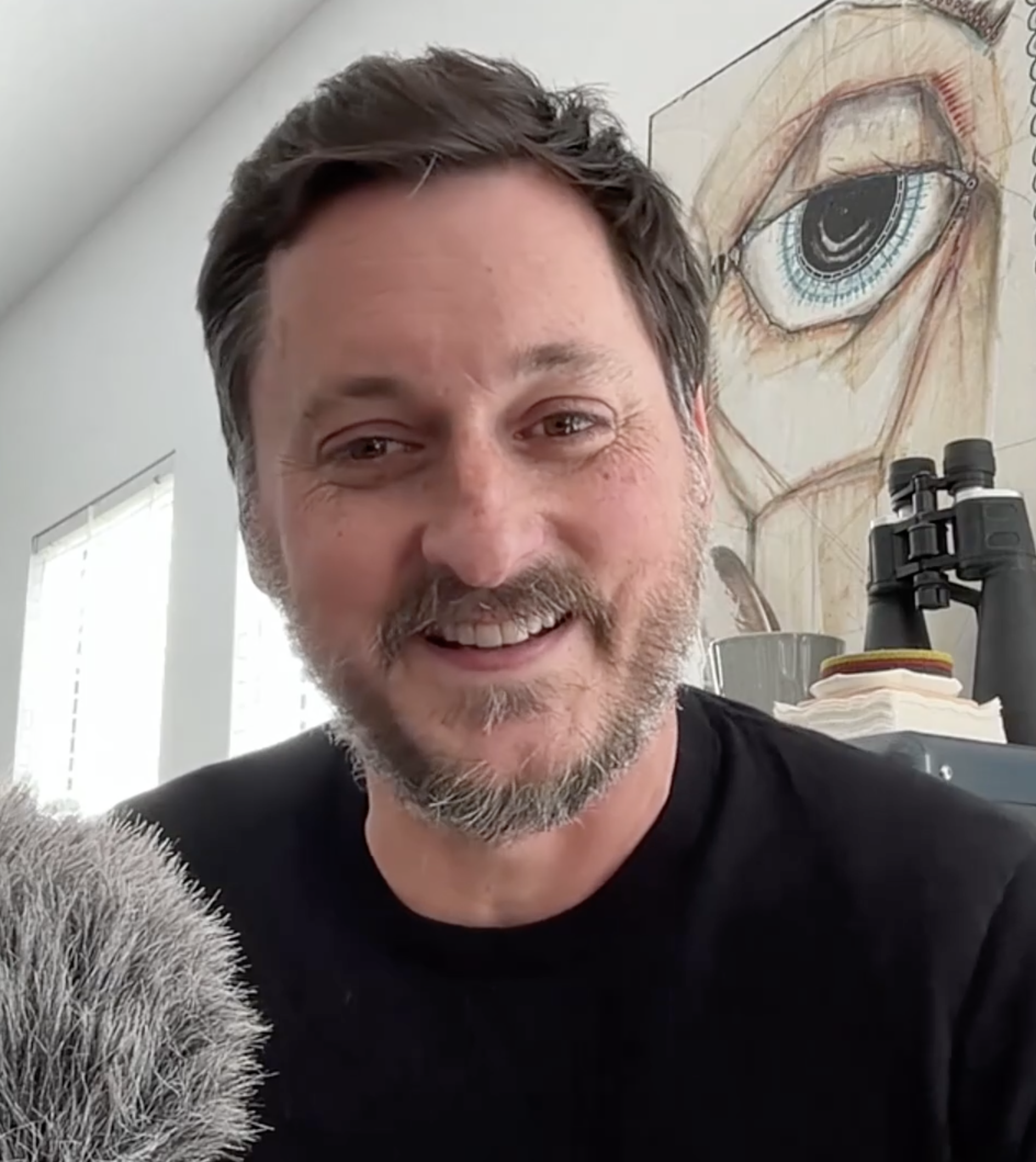
Ian Gray, co-host of the Salty & Wired podcast (hopefully soon we’ll finally get to meet in-person)
Many times, when something is wrong, we realize it right away. Other times though, it may take a friend or mentor to point it out. But every so often, our most important lesson comes from a wakeup call. Literally.
That’s how it all started for Ian Gray, a long-time construction advisor and co-host of the Salty & Wired podcast. Ian’s spent the last decade selling construction software that was supposed to fix everything (spoiler alert, it doesn't) and, somewhere along the way, he started noticing strange emails in his sent folder. Emails he had written to himself at two or three in the morning. Complete gibberish. Zero recollection of sending them.
His first instinct?
“I must be the weird one.”
Then he started mentioning it to others. One guy said, "Yeah, that happens to me all the time." Then another. Then another. And somewhere in that string of "me too" moments, Ian realized that the construction industry's hardest problems weren't living inside a process flow diagram or an RFI. They were living inside the people building the projects.
It Got Personal Before It Got Clear
At 48 years old, Ian was diagnosed with ADHD. Forty-eight. By then, he had spent the better part of his career trying to perform inside systems and structures that simply weren't built for the way his brain works. And like a lot of people in this industry, he just kept grinding it out, white-knuckling his way through it rather than asking for help.
When he finally started opening up, it wasn't some brave, courageous moment of clarity. By his own admission, he was just exhausted.
"It's not courage so much as I just got exhausted and tired of pretending."
That's a sentence worth sitting with for a second, because I'd bet money that a lot of you reading this know exactly what he means. You’ve probably even been there yourself.
But oddly enough, the turning point wasn't having all the answers. Instead, it was giving himself the permission to stop pretending he did. And once he stopped fighting his own wiring and started working with it, something shifted. There was a freeing feeling, as Ian put it, a sense that nothing was actually broken but rather it just needed to be approached differently.
The Industry Isn't One Thing (And That's Part of the Problem)
Here's where Ian's thinking has evolved recently and really got me thinking more myself. Honestly, it just might be one of the most useful reframes I've heard in a long time.
We keep saying "the construction industry has a mental health problem,” but by making it that big, we accidentally let everyone off the hook. There's no “CEO” of construction. There's no single boardroom where someone decides to start caring about people. So, when we point at "the industry” so broadly, nobody actually feels responsible.
Ian's challenge is to bring the conversation down to where it's real.
Instead of thinking about the industry, focus in and think about your company. Think about your project. Think about your crew of a handful of folks. Statistically, one of them is dealing with a mental health challenge right now. One of them may even be in a really dark place.
But truly, that's not a statistic. That's Bob. That's Maria. That's the guy or gal who showed up late three days in a row and got written up, instead of someone just asking if he or she was okay.
This reframe matters. It matters because it turns an abstract industry problem into a human one.
And humans are a lot easier to take care of than industries.
And I get it, we’ve all seen the posters. Many of us have even sat through the toolbox talks. While the 800 numbers and the EAPs are not nothing, Ian was honest about the gap that still exists between what companies say about mental health and what they actually make space for.
The question isn't whether your company has a wellness program. The question is whether someone on your crew can walk up to the foreman and say "I'm not okay today" without it being held against them.
And something like that is not a program. That is a culture. A culture that doesn't come from a poster, but rather from leadership going first.
Go First. That's It.
If you're a superintendent, a foreman, a project manager or whatever your title, Ian's most practical advice is two words: go first.
You cannot tell your crew it's safe to be honest if you haven't been honest yourself. And no, you don't need a TED Talk. You don't even need to manufacture a breakthrough moment. You just need to say something real. Something like, "Hey, I had a rough week."
That's it. Then watch what happens.
It sounds almost too simple. But Ian has seen it work.
The other thing he mentioned (which I love this because it’s free and takes a whole eight seconds) is something the team at My Steady Mind calls a BAMO breath. Breathe And Move On. Four seconds in through your nose, four seconds out through your mouth. Again, that's it. Do it twice if you need it. The simple exercise brings you back into your body, helps regulate your nervous system and gives you a shot at responding to the chaos of a jobsite instead of just reacting to it.
Little things. Big impact. Don't let the simplicity fool you into thinking they don't work.
The Cliff Is Coming
In the end, Ian closed out our conversation on one last thoughtful note that really stopped me in my tracks. He talked about a wisdom cliff approaching the industry. Read that again. Not just a knowledge cliff, but a wisdom cliff. You can look anything up on ChatGPT. But there's no app for the hard-won understanding that a 40-year veteran carries.
That's what is truly walking out the door.
And at the same time, the AI boom is pushing schedules on mega (and giga) projects harder than ever. Data centers running triple shifts on one end and a skilled labor shortage growing on the other. The conditions are prime to burn people down (and out) faster than ever before.
Which is exactly why the conversation Ian is having, whether on his new podcast Salty and Wired or anywhere else he shows up, matters so much right now. Not when we hit the next crisis. Now.
Because the people aren't just resources on some Gantt chart.
They never were.
And the sooner we stop treating them like they are, the better construction gets. Full stop.
That’s what will keep construction cool. So be sure to go tell your friends!