The AI Mirror
For twenty years, your data has been a mess. You know it. I know it. Every PM who's ever looked for the final budget knows it.
But it never really mattered. Because humans were doing the interpretation, making the mess tolerable and ultimately invisible. Construction quite literally runs on tribal knowledge layered over top of broken systems.
But then AI showed up and it asked to read the data. All of a sudden, the emperor has no clothes.
Pick Your Pain: To Change or Not
Believe it or not, there are two kinds of pain available to you in every major change. Whether it be a shift in process, tech or culture, we actually control our pain.
The first is obvious, the pain of changing. The second is more subtle, the long, slow accumulation of brokenness from choosing to remain stagnant.
All too often, construction chooses the latter thanks to the inherent risk avoidant nature of our industry.
But that mentality is costing us dearly.
The Moat is Gone. Now What?
Sometimes being right isn’t enough.
In fact, there’s a rare combination in engineering, being both deeply technical and deeply relational, that many engineers spend a career learning the hard way.
If they learn it at all.
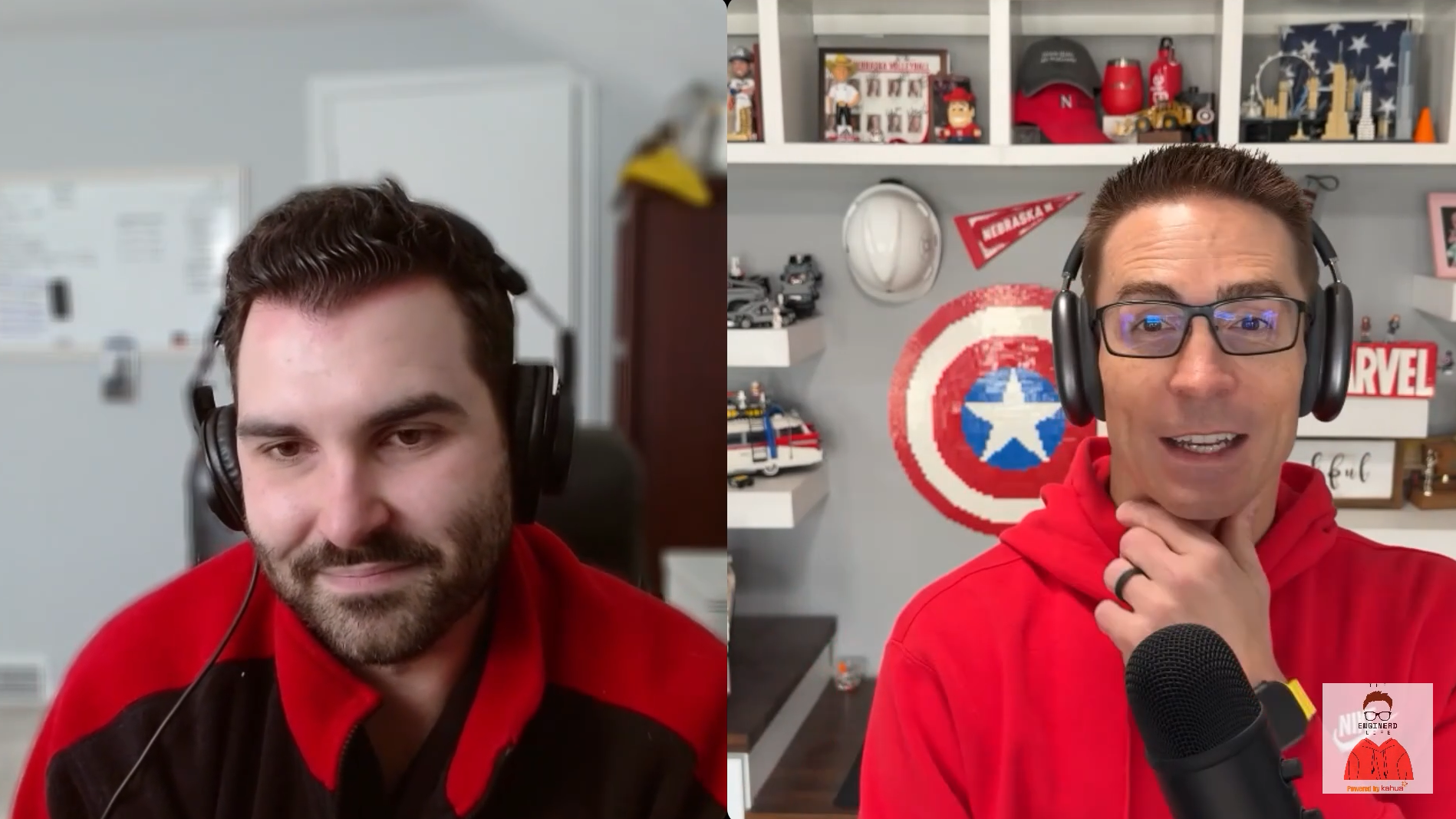
So, in an industry that tends to treat these two things as mutually exclusive, Nick Heim has made it his mission to bridge the gap.
Especially now, as AI is begins to remove the moat of technical differentiation.
Build Value. Not Just Data.
We talk a lot about technology in this industry. AI. Robotics. Digital twins. The list keeps growing and every week there's another platform promising to transform how you build.
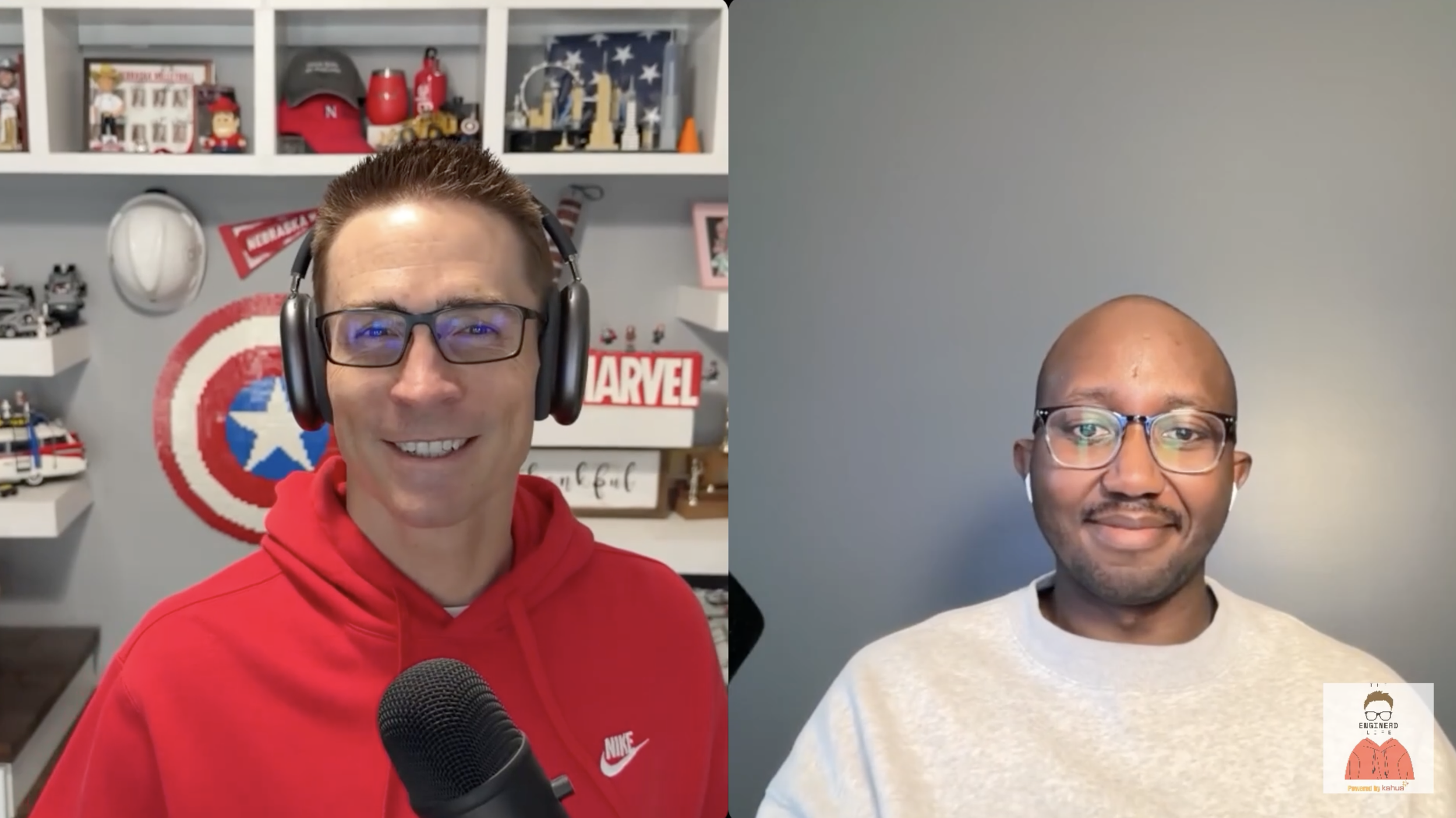
But Victor Muchiri asks a simple question that many people will skip right past.
Are we actually creating value? Or are we just getting better at tracking activity?
The Tech Isn’t the Problem. The Disconnect Is.
It happens all the time in construction. A new piece of technology is introduced using all the right buzzwords.
Revolutionary. Transformational. Game-changing.
But over time, it slowly fades into the background. Not because anyone made a decision to abandon it, but because it never became part of how the work actually got done in the first place.
For the most part, we’ve treated these moments like isolated misses and, of course, tell ourselves the next one will be different. But the more we do this it becomes increasingly clear, nothing about these misses are random.
They’re a pattern.
The Idea is Only Half the Work
We’ve all been there. Mid-conversation, fully in our flow…when then we see it. That look. The look of total confusion, written all over the other person’s face. That’s when it hits us.
Understanding something and explaining something are not the same thing.
In an industry like construction, where alignment is everything and miscommunication is expensive, the ability to explain something is so much more than a just soft skill.
Stop Chasing Tech. Start Building Strategy.
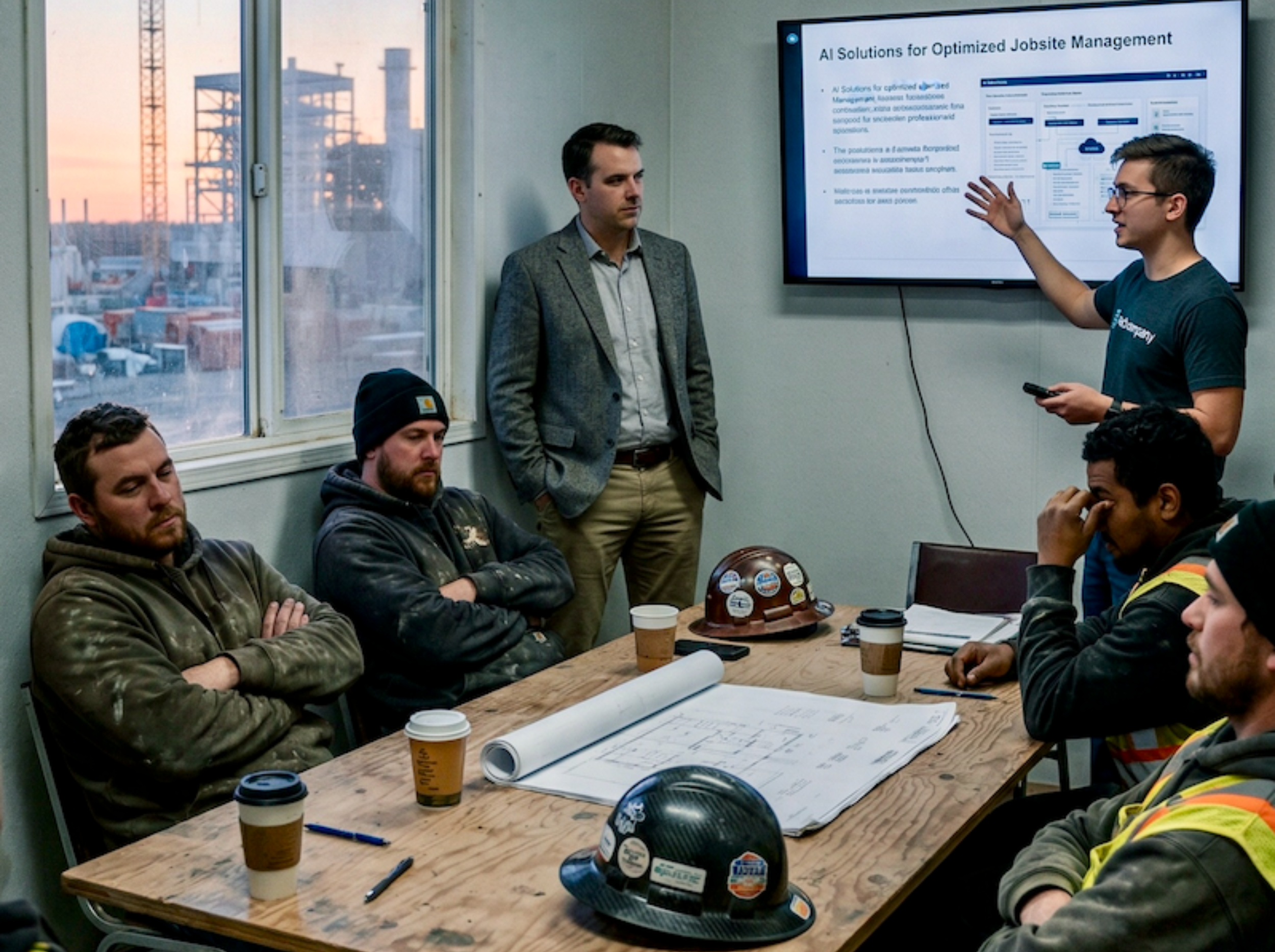
If I were to ask you how many software subscriptions your organization currently paid for, could you answer?
That question may be a little tough for you to answer, and the truth is, you’re not alone. There is an industry-wide problem that we’re ashamed to admit.
Construction doesn't have a tech problem. It has a strategy problem.
And no amount of new AI-powered software is going to fix it.
The Hardest Problems in Construction Have Nothing to Do with Tech
Many times, when something is wrong, we notice right away. Other times, it may take a friend pointing it out. But every so often, the most important lesson comes from a wakeup call. Literally.
That’s how it all started for Ian Gray, a long-time construction advisor and co-host of the Salty & Wired podcast. And while his first instinct was that he “must be the weird one,” he soon realized that the construction industry's hardest problems weren't living inside a process flow diagram or an RFI.
They were living inside the people building the projects.
The Trade Gap We Built Ourselves
Every so often a belief becomes so embedded in our culture that we stop questioning it entirely. Get good grades. Go to a good college. That’s the path to success.
It is a message that’s been repeated with such consistency that it feels less like advice and more like a rule.
But this story we’ve been telling ourselves might not be as solid as we thought. What do we do when the system we trusted suddenly stops working the way we were promised it would?

The Question That Changes Construction
There’s something ironic about calling Tyler Campbell’s superpower “listening.” If you’ve ever tuned into his podcast, you’ve picked up on his energetic, opinionated and quick-witted charm.
What you may not expect though is while Tyler may have started out as a listener to the industry, there was a point in time where he lost his edge. Behind all that boldness lies a superpower forged through failure, ego checks and a few lessons in humility.
Like the realization of just how little he actually knew.
The Bottleneck Was Never the Tools
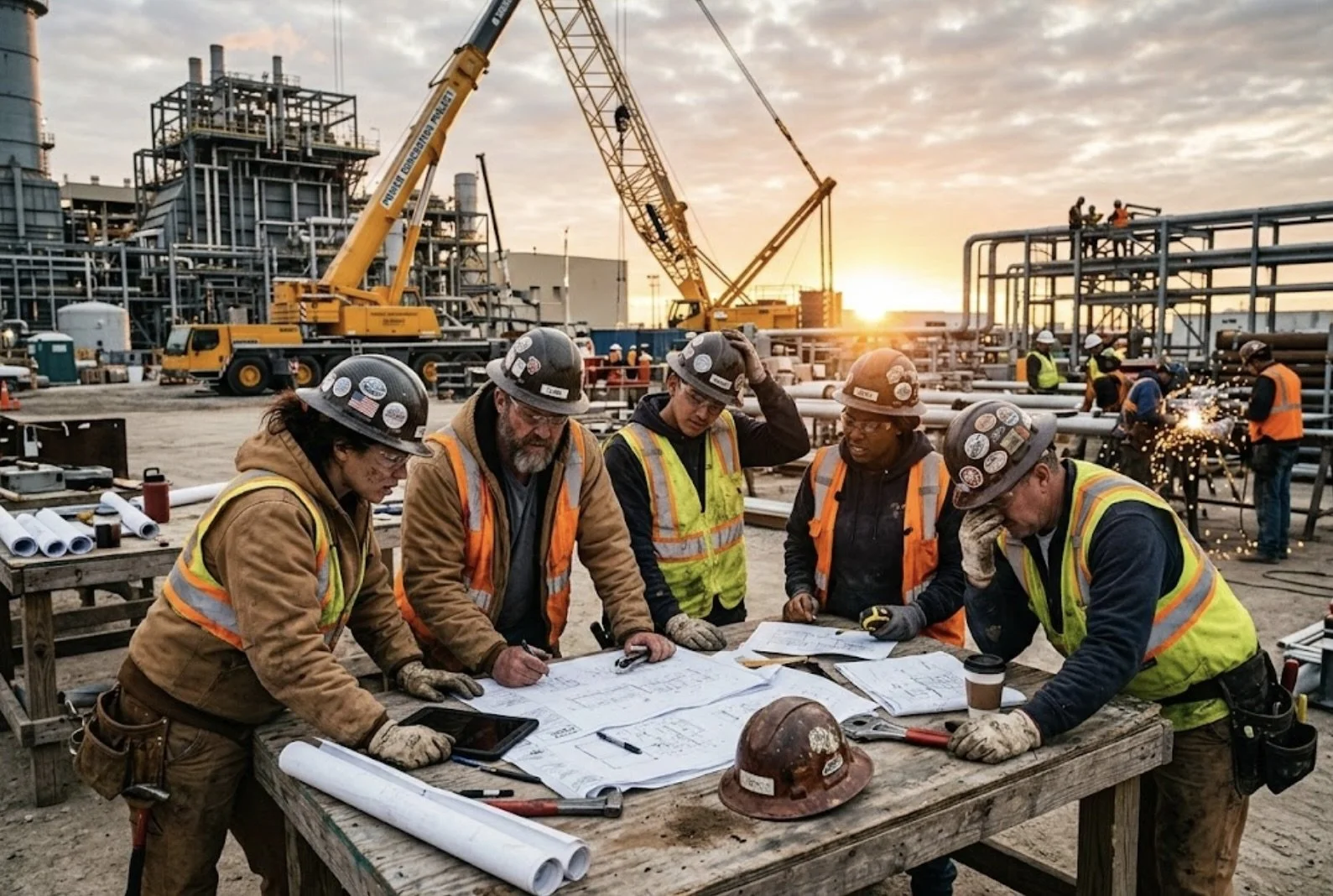
For the better part of fifteen years, I’ve preached the benefits construction technology, believing deeply that if we could just get the right technology into the hands of builders, productivity would finally improve.
But alas, it hasn’t.
Over the last two decades, software adoption has exploded. Yet, when you take a look at the data surrounding construction productivity, the curve hasn’t followed suit.
So, let’s be real honest, if technology alone was the secret, we would’ve seen the proof by now. That means the bottleneck is bigger than the tools.

Processes First, Tech Second
There’s a subtle frustration humming beneath the surface of our industry.
We have more technology than ever. More dashboards. More integrations. More AI pilots. More digital transformation initiatives with glossy slide decks and bold promises.
But if we truly want better outcomes, we have to fix the way we work.
