The Idea is Only Half the Work
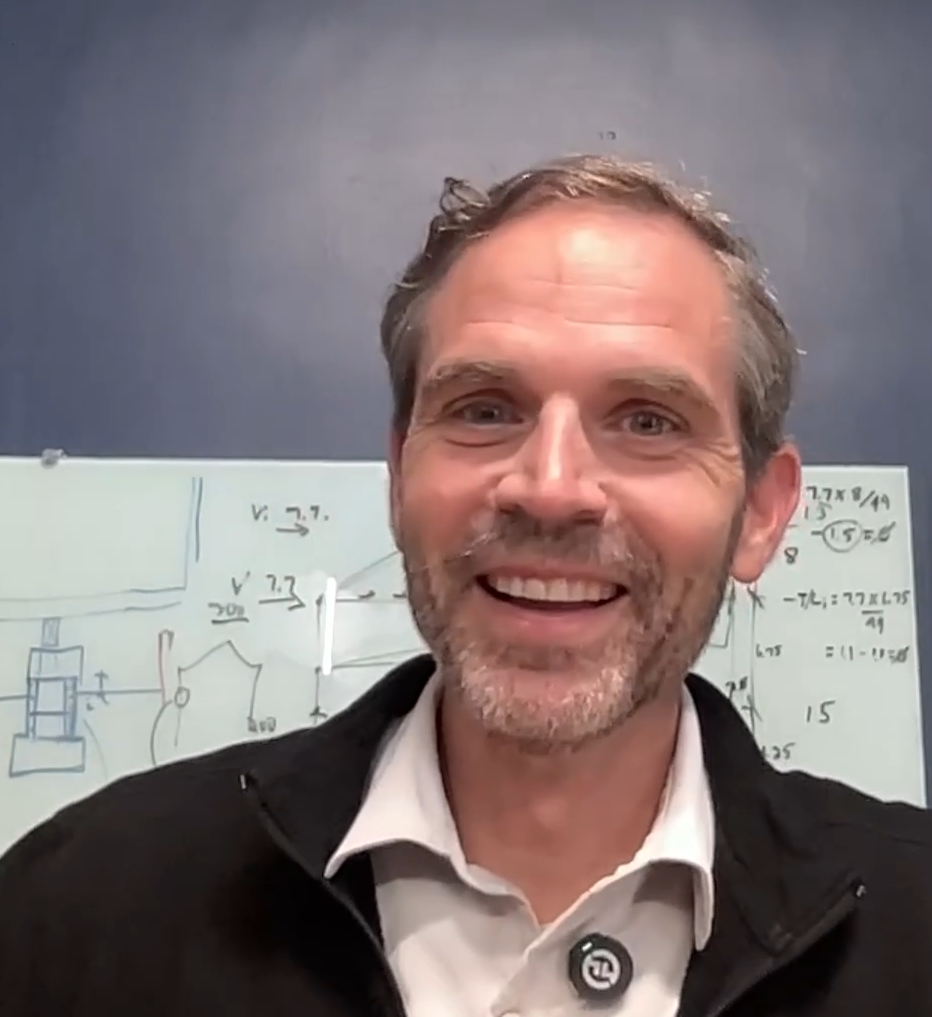
Andy Richardson of 29E6 and host of the ENHANCE AEC podcast (another that I’ll hopefully meet in-person soon)
We’ve all been there. Mid-conversation, fully in our flow…when then we see it. That look. The look of total confusion, written all over the other person’s face. That’s when it hits us.
Understanding something and explaining something are not the same thing.
It’s that distinction that led to my sitting down with Andy Richardson of 29E6. Andy has spent nearly three decades in structural engineering, navigating complexity that most people never even see. But what makes him stand out isn’t just his depth of knowledge. It’s what he can do with it.
You see, Andy has this rare ability to take complex engineering concepts and make them feel approachable without dumbing them down. He doesn’t strip away the meaning. He just removes the unnecessary barriers. And in an industry like construction, where alignment is everything and miscommunication is expensive, that ability is so much more than a soft skill.
“A Simply Supported Beam in an Indeterminate World”
It’s a quote from a colleague that perfectly captures the nature of engineering. On the surface, it sounds technical, but the idea behind it is simple.
Engineering is about modeling reality, and reality is messy. It doesn’t fit neatly into equations and therefore can’t be solved perfectly. So, engineers simplify. They break complex systems into manageable pieces to design something that works.
But Andy realized early in his career that this same principle applies to communication. If you have to simplify something in order to understand it, why wouldn’t you do the same thing when explaining it to someone else?
It’s a mindset that was born out of necessity. Early in his career, Andy relied heavily on teaching himself. And when you’re teaching yourself, there’s no hiding behind jargon. You either understand it or you don’t. And that’s how he learned to break things down to their fundamentals.
The habit expanded to become the foundation of how he communicates, teaches and leads.
The Industry’s Favorite Mistake: Making Hard Things Harder
The irony when it comes to engineering and construction is that we tend to take complex problems and often make them even harder. Case in point? Concrete is made of cement, sand and rocks. That’s it. But in technical language, rocks become fine aggregate and coarse aggregate, layered with terminology that can create more confusion than clarity.
Andy, however, shared a story about a professor who cut straight through that. Instead of leaning into the technical terms, he said, “We’re talking about rocks. Small rocks and big rocks.”
That’s not oversimplification. That’s clarity. Yet for some reason those two get confused all the time.
Clarity isn’t about removing complexity. It’s about removing unnecessary complexity. Because when you add layers of language on top of something that’s already difficult, you don’t elevate the conversation. You isolate it.
And in construction, isolation leads to misalignment. Misalignment leads to rework. And rework is where projects go to lose time and money.
The Cost of Miscommunication Is Very Real
Take, for example, a simple small commercial building with a glass front. From an architectural perspective, it makes sense, looks good and aligns with the owner’s intent for natural light.
But from a structural standpoint, it introduced a problem. Glass replaces walls, which provide lateral stability in hurricane-prone areas. That would mean more steel, and more steel would mean more cost.
Instead of letting the design progress and fixing it later, Andy stepped in early and had the conversation with the architect before construction began. By adjusting the placement of the glass slightly they could eliminate the need for a steel frame entirely.
Same design intent, completely different outcome.
Without that early clarity, the project likely would have moved forward, only to require redesign, repricing and frustration across the board. It’s a reminder that communication isn’t just about sharing information. It’s about shaping outcomes.
Communication Isn’t a Talent. It’s a Practice.
One of the things that became clear in talking with Andy is that his ability to communicate complex ideas didn’t show up fully formed. It was built, refined and pressure-tested over time. And like most meaningful skills, it evolved when he put himself in situations where clarity wasn’t optional.
One such situation happened to be teaching. After the Great Recession, he found himself stepping into a role where he had to explain engineering concepts to others who were trying to learn them from scratch. And teaching has a way of exposing every crack in your understanding. You can’t hide behind complexity when someone is depending on you to make it make sense. That’s where he began breaking things down further, using diagrams, simplifying language and focusing on what actually mattered. Not to impress, but to connect.
That same mindset carries through into his podcast, Enhance AEC. What makes the show different isn’t just the topics, it’s how Andy approaches the conversation. He doesn’t try to prove what he knows. He tries to understand what others know and why it matters to them. He asks questions in a way that invites honesty, not defensiveness. And in doing so, he creates space for something more meaningful than surface-level answers.
Which is what brings this all together. Most people think they’re good communicators simply because they talk a lot. They send emails, sit in meetings, present ideas and assume the job is done once the words leave their mouth. But as Andy pointed out, there’s a difference between talking and communicating.
Talking is about delivering information. Communication is about making sure it’s understood.
That shift changes everything. It forces you to listen more intentionally, to break ideas down to their fundamentals and to be disciplined about how much you say. It also requires checking for understanding so that you can adjust when something doesn’t land.
Because communication isn’t about sounding smart. It’s about making others smarter in the moment you’re speaking.
The One Skill AI Can’t Replace
Like most conversations these days, we eventually talked about AI. It’s impossible not to. There’s a lot of focus on how technology can make us faster, more efficient, and more informed.
But when I asked Andy what skill will matter most regardless of how advanced technology becomes, his answer was simple.
Care.
Not strategy. Not technical expertise. Just care.
While the rest can be automated, you can’t automate care. And communication only works if you care whether the other person understands. You have to care about the outcome, not just the delivery. You have to care about the people you’re working with and whether they succeed.
That’s something no robotic software can replicate.
The Idea Is Only Half the Work
If there’s one takeaway from this conversation, it’s this. Having a great idea isn’t enough. It’s only half the work.
The other half is making sure that idea can be understood, supported and acted on by others.
In construction, that’s the difference between progress and frustration. It’s the difference between alignment and confusion. It’s the difference between a project that moves forward and one that stalls under the weight of miscommunication.
At the end of the day, we don’t build anything alone. We build it together. And that only works when everyone is on the same page.
Construction is cool, tell your friends!