The Tech Isn’t the Problem. The Disconnect Is.
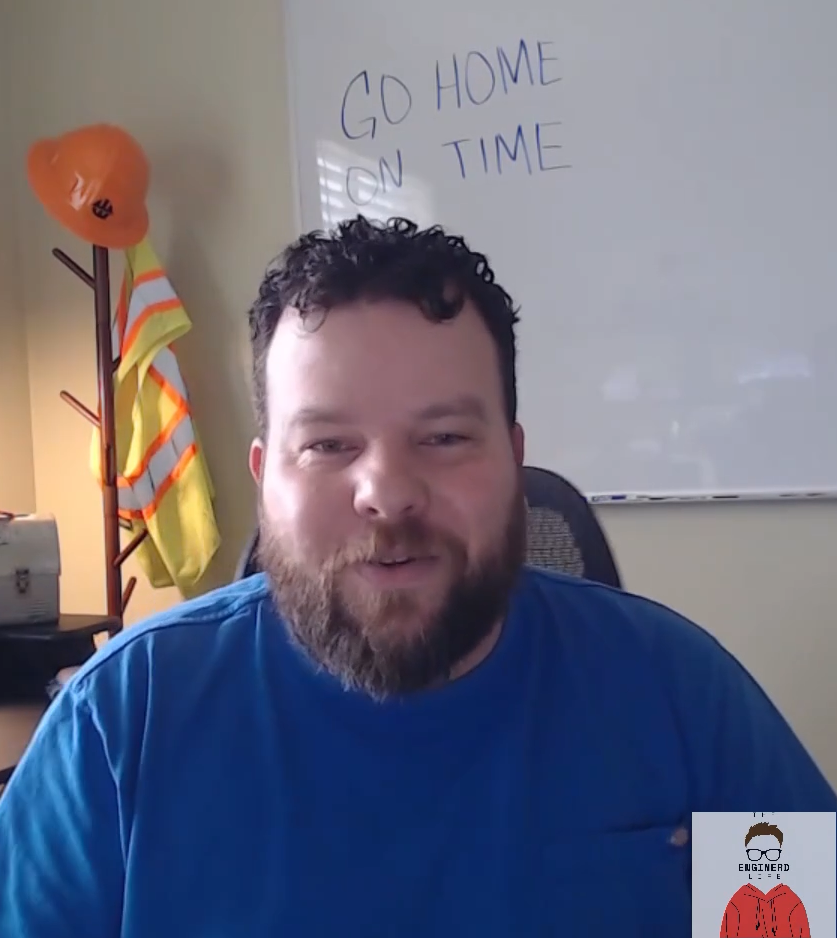
Goodrich Fabre of HardHatCoach.ai (yet another that I hope to meet in-person soon)
It happens all the time in construction. A new piece of technology is introduced using all the right buzzwords.
Revolutionary. Transformational. Game-changing.
The thing that finally brings clarity to the chaos. Then it quickly gets approved in a boardroom, funded with confidence and rolled out with nothing but optimism. But over time, it slowly fades into the background. Not because anyone made a decision to abandon it, but because it never became part of how the work actually got done in the first place.
If you’ve been in this industry long enough, you’ve likely seen this happen more than once. And for the most part, we’ve treated these moments like isolated misses. We blame the implementation, the training or even the software itself. And of course, we always tell ourselves the next one will be different. But in my conversation with Goodrich Fabre of HardHatCoach.ai, it became clear nothing about these misses are random.
They’re a pattern.
When “Game-Changing” Becomes Predictable
Goodrich didn’t start out cynical towards construction technology, but a slow repetition of unsuccessful transformations started to wear on him. By the fifth time he watched a “game-changing” tool fail for the same reasons, it stopped being surprising and started being predictable.
And when something becomes predictable, the question shifts from “why didn’t this work?” to “why does this keep happening?”
When the same outcome shows up again and again, the issue is rarely the tool itself. It’s the environment it’s being placed into. Construction has historically operated under the simple assumption that we just need better technology. More automation, better data, smarter systems. There certainly is some truth to that, but honestly it’s incomplete.
You see, what we’ve actually been doing is trying to solve a human problem with a technical solution. And that gap is where most of these failures live.
The issue isn’t whether the technology works. It’s whether it fits.
Top-Down Tech Destroys Adoption
Technology has to fit how the field operates, how decisions are made and how time is experienced on a jobsite. In the field, there is no pause button. There’s no time to learn a new system or rethink a workflow. Decisions happen quickly, often with incomplete information, and they carry real consequences. And that’s where Goodrich’s made his biggest discovery.
“The moment someone in the field has to stop and think about how a tool works is the moment that tool has already failed.”
Most construction technology is built from the top down, designed to provide visibility and control at the leadership level. On paper, that makes sense. But construction doesn’t happen on paper. It happens in the field, where the priority is always forward progress.
When a tool is optimized for reporting but slows down execution, it creates friction. And when friction shows up in the field, adoption disappears.
The Risk of False Confidence
The most dangerous part of this disconnect isn’t wasted investment. It’s the illusion it creates.
When technology is implemented without true clarity, it produces something that looks like control but isn’t. Dashboards look clean. Reports look complete. Everything appears aligned and running smoothly.
But underneath? The real problems are still there, but now they’re undocumented.
Goodrich described this as false confidence. When we believe we have clarity in and around the project without actually having it, we start making decisions with confidence that aren’t grounded in reality.
And that false confidence? That’s what causes projects to silently shift from proactive to reactive without anyone noticing until it’s too late.
The Missing Link: Owning the Translation
This is where someone like Goodrich, and the experience he has, really shows up. It’s not just that they understand the technology. It’s that they understand how to connect the technology to the field in a way that builds trust.
Goodrich has used his abilities to translate complex, rapidly evolving technology into something leaders can actually act on, not because the technology is perfect, but because the context is real. He knows which signals matter that allows him to pinpoint when to trust the data and when to question it.
Most importantly though, he understands that if the field doesn’t adopt the tool, nothing else about it matters.
That translation layer is what has been missing in the focus around digital transformations.
Executives will often say they want their field teams to take ownership of the tech, to think like leaders and to make decisions on solutions with confidence. But when those decisions are made, they often get second-guessed or pulled back into a more centralized process.
Goodrich described this as “accountability without air cover.” Over time, that teaches people to hesitate rather than act. Not because they don’t care, but because they’ve learned it’s safer not to.
And when you layer that on top of a major new technology adoption, it becomes even more impactful. We insist that teams trust and adopt the new tools, but when they don’t feel trusted in return, that adoption will simply remain surface-level.
The Shift We Must All Notice
I know what you’re thinking, this challenge isn’t new to construction, and you’re right. But the urgency is. The construction industry is being pushed to move faster, with fewer people and tighter constraints, while tech is evolving at an unprecedented pace.
So now more than ever the tools are advancing faster than the field can adapt to them.
Goodrich put it simply. The technology has outpaced the industry’s ability to adopt it. That gap creates friction, skepticism and a growing disconnect between what technology promises and what people actually experience.
But despite all of that, there is reason for optimism. The most meaningful progress isn’t coming from large rollouts or mandates.
The most meaningful progress is now coming from the field.
It’s coming from individuals who are finding ways to use tools to make their jobs easier, not because they were told to, but because they found what actually works. Small, practical wins that reduce friction and save time.
And that’s where adoption starts. Not with mandates, but with momentum.
Finding the Simpler Path Forward
At the end of the day, trust isn’t built on perfect technology. It’s built on understanding the limitations of the technology.
That’s why we need to rethink how we position technology altogether. Not as a total replacement of our people’s work, but as an augmentation of it. Let it help you get started and handle the heavy lifting, but don’t hand over responsibility.
Like you, Goodrich was quick to point out that none of this is new. The field has been saying it for years. We just haven’t been listening.
So maybe that’s the real opportunity in front of us. Not to chase the next big thing, but to finally close the gap between what we’re building in technology and how we actually build in the real world.
Because no matter how advanced the tool becomes, one truth doesn’t change.
If the people won’t use it, it doesn’t work.
Construction is cool, tell your friends!