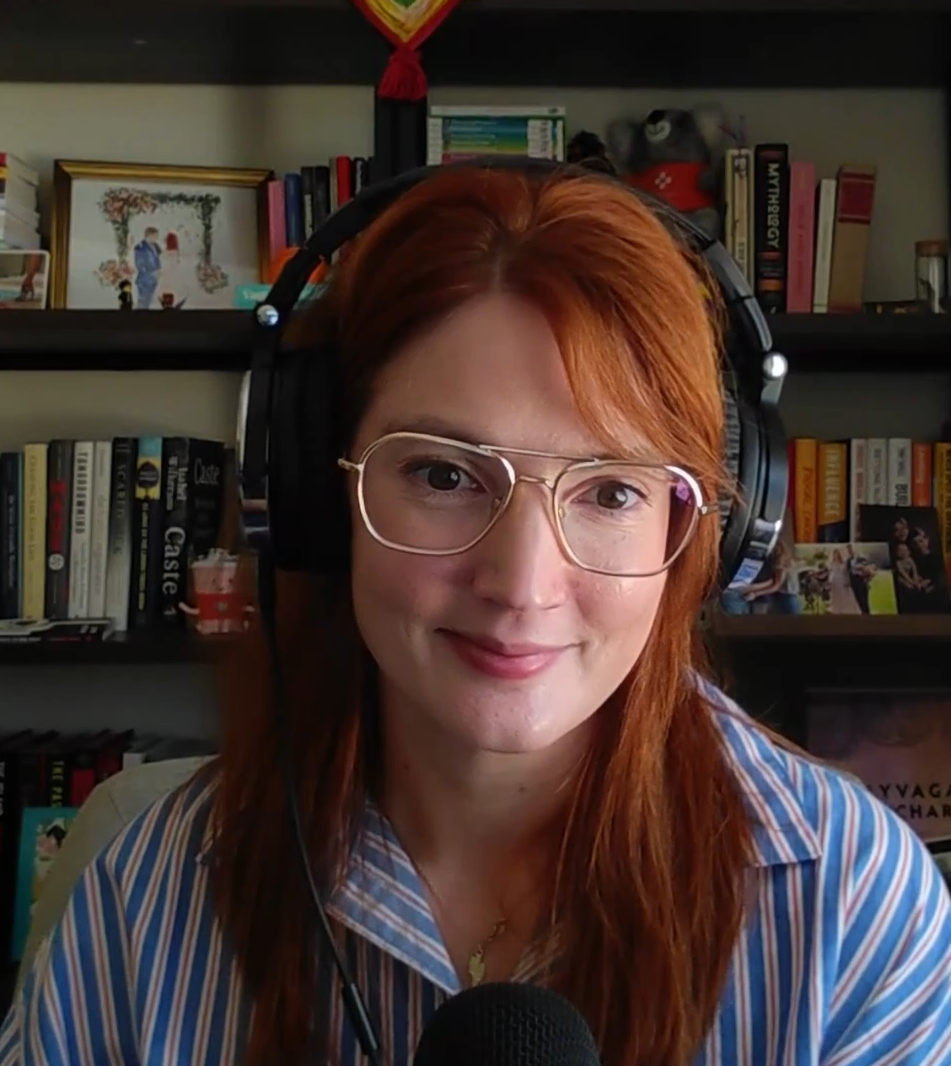
Stephanie Lemek of The Wounded Workforce (whom I have met in person, but there is no photo evidence(.
If you’ve been around construction long enough, you’ve learned a tough lesson you’ll ultimately carry for life: even the strongest steel in the world still fails.
Not because it's weak. Because of fatigue. Load a member, unload it, load it again. Cycle after cycle after cycle. Eventually a crack forms, and eventually that crack runs. It doesn't matter how impressive the material properties looked on the mill cert. Enough cycles without relief, and it breaks. Every time.
Stephanie Lemek has learned the exact same lesson, only she wasn't talking about steel.
"You bend something, you bang into it long enough, it's going to break."
She was talking about our teams in the field.
Stop Calling Toughness Resilience
Believe it or not, there is a difference when it comes to toughness and resilience. Toughness is a material property. Resilience is a structural property.
Yet we tend to use those two words interchangeably in construction. However Stephanie, founder of The Wounded Workforce, draws a very sharp line between the two.
Toughness is how much load one person can take. It's individual. You can build it, the same way you build muscle at the gym or sharpen your mind on a daily crossword. It's real, and it's worth developing. But toughness lives in a single member. And single members fatigue.
Resilience is different. In fact, by definition, you cannot build resilience without hardship. Nobody gets resilient reading about or studying someone else’s tough times. Resilience is built when hardship actually hits, and the systems of support around you let you carry it, navigate it and come out the other side with more capacity than you had before.
Read that again. Hardship plus support equals resilience.
Hardship without support equals fatigue.
And fatigue always ends the same way.
That's why the John Wayne version of resilience is a myth. The cowboy swaggering through anything, alone, forever? That's not resilience. That's a fatigue test. And we already know how fatigue tests end.
We Don't Design Bridges This Way
No engineer on the planet designs a bridge assuming one girder will gut it out.
We design redundant load paths. We design factors of safety. We design connections that redistribute load when a member gets overstressed, so the structure survives even when a piece of it is having a very bad day. A bridge is resilient precisely because no single member has to be infinitely tough.
Then we walk onto the job site and design our workforce exactly backwards.
We take a foreman and route everything through them. The schedule. The crew's conflicts. The rework. The gossip. The kid who showed up late three days running because something's wrong at home. And now, more often than not, the moment when a crew member is in genuine crisis. As Stephanie pointed out, we now have foremen and superintendents performing suicide interventions on job sites. That's heroic to be sure. But it's also a staggering load, dumped on one member, with no redundancy behind it.
Single point of failure. By design.
So when that leader finally cracks, what do we call it? A personal failing. Burnout. "They couldn't handle it." We inspect the material and never once question the structure.
An Industry Designed for Resilience
Stephanie runs a mental health certification for construction crews, and she opens every session by inviting the room to call bulls**t. The arms-crossed superintendents love that part. But here's what she's learned sitting across from the toughest rooms in our industry: construction is already running some of the best mental health interventions anywhere. We just don't call them that.
"Hey, you've been short with everybody this week. What's going on? Let's grab lunch."
That's an intervention. That's a load path. That superintendent who knows everyone's business on the job site, the crew that works like dogs because they're building a better life for their families, the camaraderie of doing something hard together. Those are structural supports hiding in plain sight. The problem isn't that construction lacks the structure. It's that we've never drawn it on the plans, so we never inspect it, never maintain it and never take the next step when a member starts to yield.
Want proof the structure matters more than the material? Stephanie will ask a room of field leaders what kept them up at night when they were 24. It was things like misspelled emails. At 34, those are the types of projects they knock out before their second cup of coffee.
They didn't get from there to here by being born tougher than the Gen Z kids they love to rib. They got here by surviving hardship inside a system that let them survive it. Guardrails that made mistakes recoverable. A veteran who said, "First night shift? Here's what works for me." That advice doesn't feel structural. It is. It's a load path.
Nobody on your site calls a safety harness a participation trophy. We mandate 100% tie-off because we accept a simple truth: when the fall comes, and it will, toughness is not a fall protection plan. The structure catches you.
A while back we talked about the human under the hat, and how we've spent fifty years protecting the outside of the worker while ignoring the inside. This is the sequel, and a part of the story was missing the first time.
Protecting the inside was never an individual assignment.
It's a design problem. And design problems belong to the people who control the structure.
Count Your Load Paths
So how do you inspect a structure you've never drawn? Stephanie handed us the barometer question, and it's brutal in the best way: "Who can come tell me I'm wrong?"
Sit with that. Every person who can walk up to you with bad news, a mistake, a warning, a "boss, this isn't working," is a load path. A route for stress to redistribute before something fails. If your honest answer is "almost nobody," you are not leading a resilient team. You are a single-member structure with a fatigue crack already forming, and you're the last one who'll see it run.
Here's the exercise for this week. Count your load paths.
Not your toughness. Your load paths. Who could tell you you're wrong? Who on your crew would flag it if a teammate seemed off, and who would they tag in next? What happens on your job when a new engineer makes a recoverable mistake: does the structure catch them, or do they free-fall?
If you're a leader, your job has changed. Instead of trying to hire tougher steel, start designing redundancy through your culture.
And if you're not in charge of anything? You still carry load. Keep caring about the people beside you the way construction people already do. When someone's off, take the next step. Tag in the safety pro, the HR lead, the project manager. One connection is the difference between a crack that gets caught and one that runs.
Because we build the most resilient structures in the world.
It's time we built our teams the same way.
Construction is cool, tell your friends!