Truth Is Time-Dependent
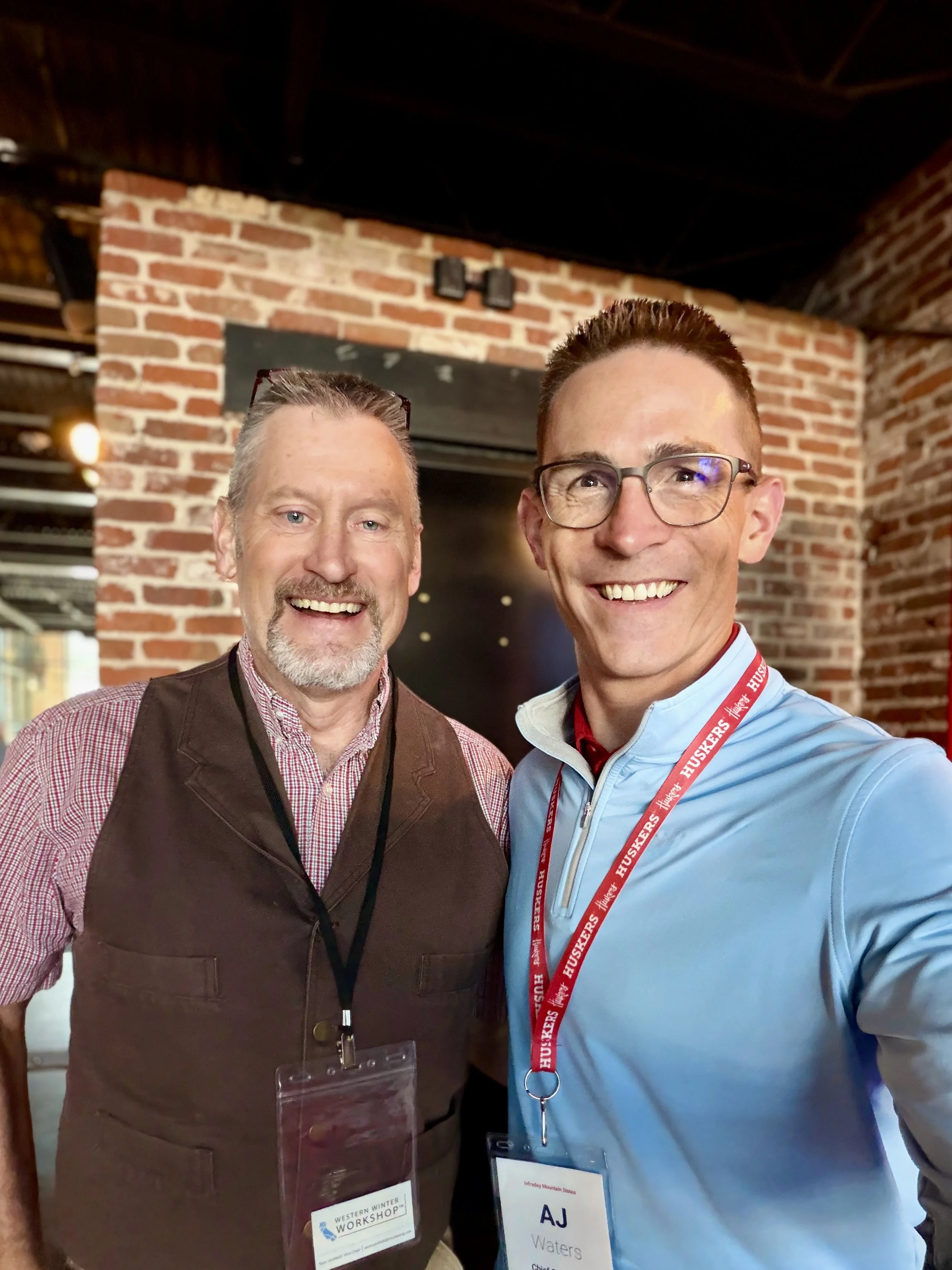
Sean VonFeldt at Infraday Mountain States on Jun 2, 2026.
Every project generates a truth. The problem is that truth tends to expire, quickly.
A schedule that was accurate last week isn't accurate today. A budget that was right before the last three RFIs isn't right anymore. Scope that everyone agreed to at kickoff has silently drifted by month six. In construction, truth isn't a fixed thing we get to point out once and walk away from. It's a moving target, and if the whole team isn't looking at the same (and current) version of it, they're not actually working from what we all like to call a shared truth.
Instead, they're working from competing memories of an old one.
That line, truth is time-dependent, is something Sean VonFeldt picked up during his time at London Underground, and it's the single best way to understand why 5D engineering exists at all. And make no mistake, this isn’t about a buzzword. This just might be the answer to a very specific, very old problem:
How do you keep truth current when dozens of stakeholders are all changing it at once?
The Old Way: One Truth, One Wall, One Point in Time
Thirty-plus years ago, Sean hit this problem before we ever had language for it. He was a fresh construction management grad and had been handed the job of master scheduler for Denver International Airport. With fifty-seven square miles of active construction (and no cell phones), the master schedule existed in exactly one place: taped to a wall in the program management office.
And that schedule was true for exactly one moment, the moment it was posted.
But a schedule on a wall doesn't update itself, and it certainly doesn't travel wirelessly. If a crew was digging a few miles away and nobody had walked a current copy out to them, they weren't wrong to be confused about what they were building toward. They were working from an old truth. Everyone was, technically, just at different points along its decay curve.
Before we ever thought up the idea of a digital twin, that was the paper twin. Every dimension of our famous “5D” was already present on that project, scope, schedule, cost, the drawings and the purpose behind it all. It just lived in a desk drawer, maybe on a hard drive or in a rolled-up set of drawings in the back of a truck. Nobody had a way to keep it current for everyone at once.
So the truth degraded, slowly and silently, until a change order made the decay visible.
What 5D Actually Fixes
Here’s what the fancy buzzwords around 5D tend to miss when they define it as "cost and schedule tied to the model." Yeah, that's the mechanism.
But that’s not the point.
The point is that 5D inherently collapses the time lag between something changing and everyone knowing it changed. Sean defines the first dimension as the why, the purpose behind the asset. Dimension two is the plan. Three is the model in physical space. Four ties it to time. Five ties it to cost and resources.
The trouble is, most teams start at 3D (the model) and never anchor back to that first dimension, which is exactly how you end up with a technically sophisticated model that still can't answer a simple question fast: is this still true, right now, for everyone?
A properly built 5D environment answers that question continuously instead of periodically. Scope shifts, and it's visible in the model immediately, not at the next status meeting. Cost moves, and everyone downstream sees it move, instead of finding out three weeks later when the invoice doesn't match the plan they were working from. Truth still expires just as fast as it always did. The difference is the update now travels at the same speed as the change, instead of waiting for someone to print a new copy and drive it out to the field.
That's why Sean draws a hard line between risk management and risk engineering.
Risk management, in his read, seems to have become synonymous with buying more insurance after something has already gone sideways.
Risk engineering means using that same continuously current model to see the risk before it becomes a change order, not after.
When everyone is looking at the same live truth, the shell games get harder to play. If scope changes, it shows up, and it shows up attached to who changed it and when. That's not punitive. That's what happens when a time-dependent truth finally has a way to keep pace with itself.
Why It Still Isn't Standard Practice
So what’s the big deal? If 5D solves this so cleanly, why has it been "the future of construction" for over a decade and still isn't the default?
Because the technology was never the hard part. Distribution was. And distribution isn't just a software problem, it's a human one. Every organization insists it's aligned around a shared mission, yet very few of them actually share information freely inside it. Information still feels like power in construction, and nobody wants to hand a colleague (or another company) something before the boss sees it.
It’s that instinct, which predates 5D, that will outlast any platform built to solve it. Unless the culture around the model changes too.
A perfect example of what this instinct looks like at scale is stakeholder scope creep. Every party wants their asset delivered, on their terms, while secretly hoping to get more for their money if nobody's watching close enough to notice.
A continuously current model doesn't eliminate that instinct. But it does remove the cover it used to hide under.
Start With the Truth You Already Have
Here’s the thing, Sean is quick to point out that none of this requires new software to begin.
Instead, start with the actual, current single source of truth your project is already running on for scope, schedule and cost, however unsophisticated it is. A hand-drawn schedule on a wall counts, as long as everyone knows it's the one that counts.
Then communicate it. Communicate it loudly. Communicate it constantly. And let the team push back on it. The moment someone disagrees with it is the moment it starts becoming real, current truth instead of a stale artifact nobody's checked against reality in weeks.
Finally, pair that with holding that first dimension, the why, in clear view. Not the model, not the schedule, not the budget. The actual asset being delivered and the reason it matters. An airport. A hospital. A rail line. That's dimension one, and it's the dimension every team defaulting straight to the model tends to forget it ever had.
Anyone hoping to become known as the person who connects organizations, rather than just the person who manages projects, doesn't need a title change or a new certification to start. It starts with showing up to stakeholder meetings and actually listening, instead of half-tuning-in while multitasking through them. The people who notice that moment, and connect it to the right resources and the right teams, are the ones who end up shaping outcomes far beyond their job description.
For folks like Sean and I, the tools have changed completely in the last thirty years. But what hasn't changed is the actual problem this industry has always had: keeping a truth that expires by the day current for everyone who needs it, at the same time, in a form they can act on.
That was true when the model lived on a conference room wall. It's still true now that it lives in the cloud. 5D modeling is just the first real answer this industry has had to keep the project truth current in real-time.
Construction is cool, tell your friends!