The Vacation Test
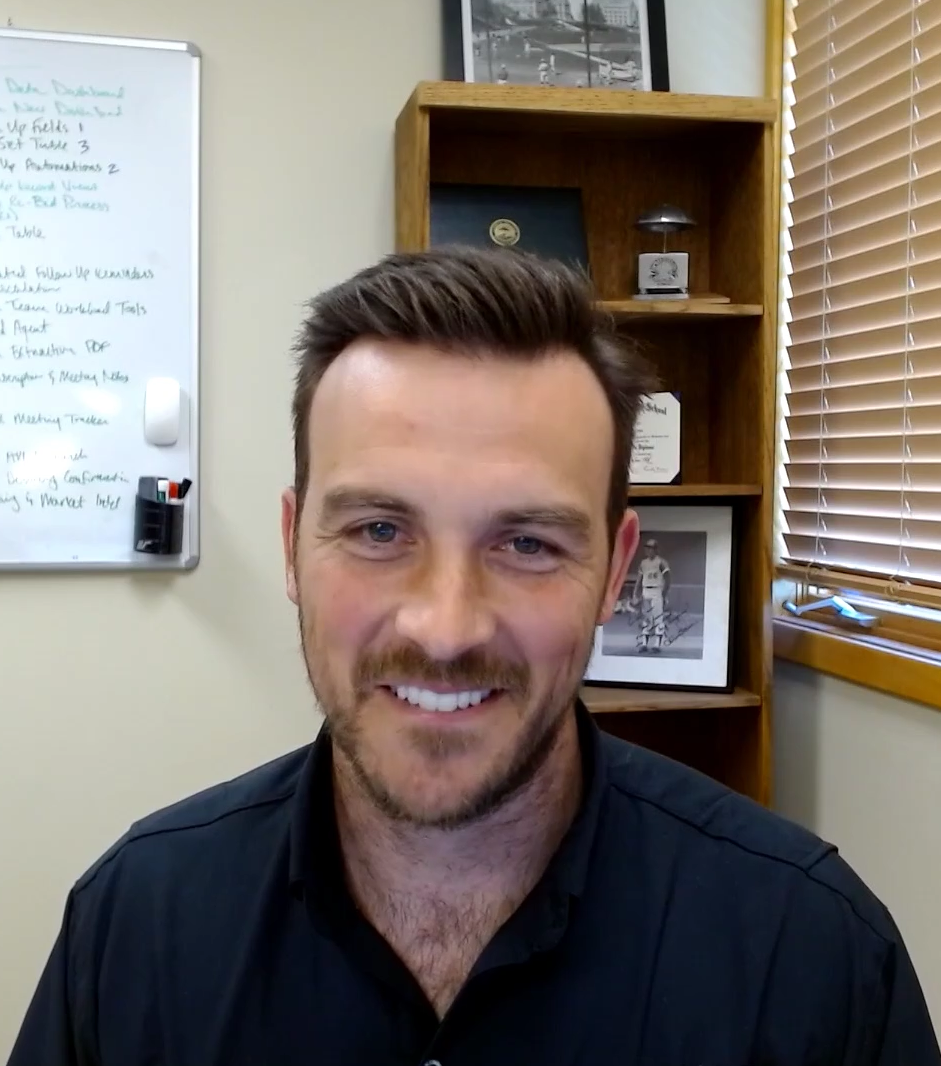
Craig Mooeny, yet another awesome person I hope to meet face-to-face soon.
Every sales organization in construction already knows the answer to this question. But if you ask Craig Mooney, many are too afraid to ask it out loud.
Would your pipeline survive you turning your phone off for a week?
Not "would things be a little messy." Not "would people have to scramble." Would it survive, period. Deals still tracked, relationships still intact, nothing quickly rotting in an inbox while you're away.
For most sales teams across the industry, the honest answer is no. The good news is, that's not a people problem. The bad news is, it’s most definitely a problem with the current systems you have in place.
One Week Away
Craig learned this first hand, running business development for a truss supplier. He had a good book of business, built the way most relationships in this industry get built. One bid. One job. One year at a time. He was building relationships the only way he knew how. The kind of relationship that takes years to earn and about a week to lose.
Then Craig took a real vacation. First one in a long time. A full week in Mexico, phone off, fully checked out.
While he was gone, a revision landed on a project, the kind of mid-stream addendum that happens constantly in this industry that will instantly reshape an entire scope if nobody's watching for it. And sure enough, nobody caught it. Not because the team was lazy or incompetent, but because there was nothing for them to catch it with. The whole deal lived in an email thread, a handful of scattered notes, and Craig's memory. His inside sales team had access to none of the context that actually mattered.
The customer ended up frustrated. And Craig lost the account.
One vacation. One missed revision. One relationship that took years to build, gone in the space of a week.
The hard part of it is, it wasn't a bad salesperson who dropped that ball. It wasn't bad luck, either. It was the total absence of a system that could function without one specific person standing in the middle of it. Craig had built a business that ran on him, not on a process. And the moment he stepped away, the business had nothing left to run on.
It was that lesson that led him into coaching for construction sales teams full-time, in an attempt to save them from a similar fate.
Why This Keeps Happening
Talk to enough sales leaders in construction and you'll hear a familiar rhythm. Winter, you're digging for leads, chasing every opportunity you can find. Spring and summer hit, the phones ring themselves, and suddenly there's no time to think about pipeline at all. Reaction mode becomes the whole operating model. Growth becomes something that happens to you instead of something you create on purpose.
The funny thing is, the tools that would fix this already exist in most of these companies. RFPs and bid requests come in through the same handful of channels every time: email, phone, bid boards. The patterns are identical across almost every contractor and supplier in the industry. But these identical inputs still produce chaos, because the inbox becomes a graveyard. Things get buried under internal noise, external noise and whatever other fire happens to be burning that day.
And as we already noted, nothing falls through the cracks because anyone made a mistake. It falls through because there was never a net underneath it to begin with.
But when you ask most sales teams how the quarter is going you'll get a temperature check, not a forecast. “We feel good about a few of these” or “The market seems to be picking up.” That’s a far cry from the ideal, a team that can tell you the actual probability a job lands, the date framing starts, the date the customer wants to close. One of those conversations builds a business. The other one just fills a meeting.
A few years ago, supply chain gaps let competitors steal business just by having product on hand. Today, most companies can deliver comparable quality on comparable timelines. That means price is doing more of the deciding than it used to, and the accounts you already have are the most expensive thing in the building to lose. Winning new logos is expensive and slow. Protecting the relationships you've already earned is the cheapest growth lever most companies have sitting right in front of them, completely unused.
But the industry's favorite growth strategy (referrals) is really just a symptom of the same disease. They work because they're the cheapest, fastest way to earn trust. But leaning on them as a primary strategy is the easy way out, not the disciplined way forward.
You’re outsourcing your pipeline to chance while calling it a relationship business. One missed phone call away from crumbling.
The Fix Isn't Hustle
But contrary to popular belief, Craig's answer to losing that account wasn't working longer hours or personally guarding every deal more tightly by skipping vacation altogether. Instead it was building visibility. Creating a system where any person on the team could step into any deal and immediately see where it stood. The original RFP. Every revision. The current stage. The date that mattered next. Not a better memory. A better structure that didn't depend on anyone's memory at all.
The issue beneath most sales failures in construction is that they get treated like a people problem. If we just hire someone more charismatic, more of a hunter, better on the phone, etc, etc. But in reality, they're actually an infrastructure problem. Consistency and follow-through beat charm every time, because a sales cycle in this industry can run a year or longer.
Charisma doesn't survive twelve months of showing up. Discipline does.
Contractors will spend real money on a new piece of equipment without blinking, because the return is visible on a spreadsheet. Ask for the same investment in a sales system, training or even the relationship-building dinners that generate referrals in the first place, and the budget suddenly gets tight. The return is harder to draw a straight line to. But the cost of not having a system doesn't disappear. It just shows up later, disguised as a slow quarter nobody saw coming, or a great account that walked out the door while someone was on vacation.
So, Would You Survive It?
The good news is, you don't need to overhaul your entire sales operation this week. Start smaller. Pick one painful, repeatable moment. Whether that’s how a bid request gets logged, how a revision gets flagged, how a stale deal gets revisited or something else, map exactly how it works today. Then ask what would break if you weren't the one holding it together.
Because that’s the question Craig wants us all to sit with: if you turned your phone off for a full week right now, would your pipeline survive you? Or, does it only survive because you never actually left?
Construction is cool, tell your friends!