Trust Has No Neutral Transactions
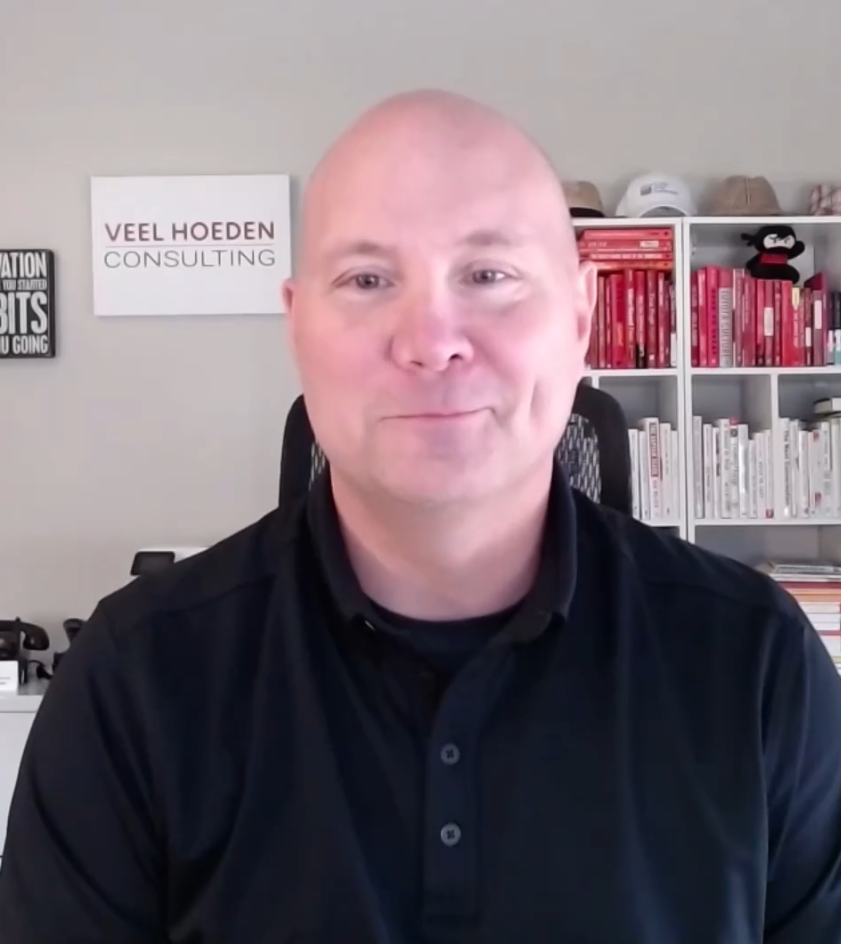
Joel Bennett of Veel Hoeden Consulting, another person I cannot wait to meet in person soon.
There's a lie that runs across many blue-collar jobsites in America today. It goes a little something like this: "It’s not a big deal."
The missed callback. The 1:30 arrival when you said 1:00. The "I'll get back to you tomorrow" that ends up being three days later. All too often, leaders tell themselves those are trivial things, they’re nothing, people don't even notice.
They notice.
That’s why Joel Bennett set out on a mission to teach leaders in construction (and in blue-collar work in general) how to actually operationalize trust. Not the kind that gets painted on a breakroom wall next to "SAFETY FIRST" and "WE'RE A FAMILY," but the kind that shows up in how you spend a Tuesday afternoon. And he does so by using a very simple, straightforward analogy.
It comes from Stephen Covey's Speed of Trust: the trust bank account. Deposits and withdrawals. Most people will just nod along. “Yeah, yeah, build up the balance, got it.”
Thankfully, Joel doesn’t let it end there.
There Are No Neutral Transactions
Read that again, because that’s the whole point. It’s not that most things build or break trust. Everything does. There simply is no neutral. The phone call you didn't return wasn't a zero. The meeting you showed up to on time wasn't a zero. You are always, every hour, either depositing or withdrawing whether you meant to or not, whether you noticed or not. The account is moving no matter how much you tell yourself it's parked.
More importantly, though, the deposits are most often made in pennies. Show up on time, here’s a dime. Return the call, there’s a nickel. Prep the materials right, a quarter, wow. Slow, small, almost invisible. You could do it right for a month and barely feel the balance move.
But withdrawals? Those come in the hundreds.
Miss the jobsite handoff and the guy coming in behind you doesn't lose a dime of faith in you. No, he loses fifty bucks, a hundred, or even sometimes a thousand. One blown commitment can wipe out a month of quarters. Joel will often prove this with a simple challenge. He asks folks if anyone ever earned their trust forever with a single act. Almost nobody can name one. Then he asks if anyone ever lost their trust forever with a single act. Almost everybody's got that name.
The thing is, this asymmetry isn't a bug in human nature. It's built into our operating system. And once you realize it, you can't run the "it doesn't matter" excuse anymore, because it always mattered. The smallness was never the point. The direction was.
Your Time Is the Biggest Deposit
So what do you actually do with this on a Tuesday?
According to Joel, what separates this from every other leadership platitude is the investment of your time. That is the deposit that clears the biggest. Not the pat on the back. Not the "good job, team." Time. When you give someone your attention, you're telling them they're worth the one thing you can't make more of.
Take a moment and think about a few of the people who shaped you. Whether it be a coach, a foreman or a mentor, the bridge to every one of them is the same. They spent time on you when they didn't have to.
But of course, there’s always a catch. Time spent the wrong way is a withdrawal dressed up as a deposit. Stand over someone's shoulder all afternoon and you haven't invested in them. You've told them you don't trust them to do it without you watching. Joel calls that substituting management for trust. Over-managing, under-trusting. You meant to make a deposit and instead you bounced a check.
Extend Trust First
It sounds simple, but try giving it a go once this week.
Our wiring says make them earn it first, and that’s the core problem. The person across from you is wired the exact same way. They’re waiting for you to go first. So nobody moves. You get the middle-school dance, both of you at arm's length, the whole crew burning daylight waiting for someone to risk the first step.
Somebody has to break it. Be that somebody. Hand a person real ownership and tell them, straight up: this is yours, I trust you with it until you give me a reason not to. It’s Reagan's "trust but verify.” You can still course-correct if it goes sideways, but you went first.
What to Do When You're the One in the Red
Here’s the thing, up to this point it’s been assumed that you're the one being let down. The callback you didn't get. The handoff they missed. And that's exactly how average leaders run the trust account, paying close attention to everyone else's balance and never their own.
Joel can see that the second he walks into a room. They’ll bring him in for "accountability training," and the conversation quickly becomes "you need to hold so-and-so accountable." It's always pointed at somebody else, never the mirror. But the whole premise is broken. You can't hold another person accountable, accountability is a thing you do to yourself. At the end of the day the only person who can hold you to your word is you.
So instead, run a quick audit on yourself for once.
You expect the callback. Do you return them?
You’re disappointed that "tomorrow" ended up "next week.” When did you last drop a ball for three days?
What might feel like little promises really are not. They're the exact pennies-and-hundreds math you're subconsciously tracking on everyone else while quietly draining the account and calling it busy.
It’s the same trap with feedback. Leaders will tell you that they need to give their people sharper feedback that actually sticks. Good, Joel agrees. But when their boss offers them a note and they get frustrated about someone else telling them how to do their job? You better be able to take it if you’re going to hand it out. The loop simply can’t break the second it points back at you.
Go First Again
The good news for us all is that repairing this isn't complicated. Which seems to also be why it’s so hard. Go first here too. Apologize to the one you let down with sincere, “that's on me.” Naming your own withdrawal is the single biggest deposit a leader can make. The entire crew is watching to see whether the rules apply to you, and the day they watch you hold yourself to the standard is the day the standard becomes real.
To Joel, there are only two ways to make your word mean exponentially more. Follow through on more of your promises, or make fewer of them. It’s that simple. Make fewer and keep them all, and people learn that when you say it, it's done.
We Made Them a Promise
Here’s the thing, we've spent a decade telling kids in high school gyms that construction is a real career, a real opportunity, real money. We made them a promise. And according to Gallup, 70% of whether someone stays and gives a dang is driven by one specific person, their leader.
If we truly want to solve this challenge, we can keep getting them in the door on the promise. But we must stop losing them by not delivering on it.
The trick is, “deliver-on-it” isn't a program, and it certainly isn't a poster. It's a thousand penny deposits and the discipline not to bounce a hundred-dollar check. It's where you point your time on a Tuesday afternoon, and who you decide to trust before they've given you a reason to.
There is no neutral transaction. You're moving the balance right now, even as you read this. The question for you is, which direction?
Construction is cool, tell your friends!