You’re Not Hiring Talent. You’re Building a Coaching Tree
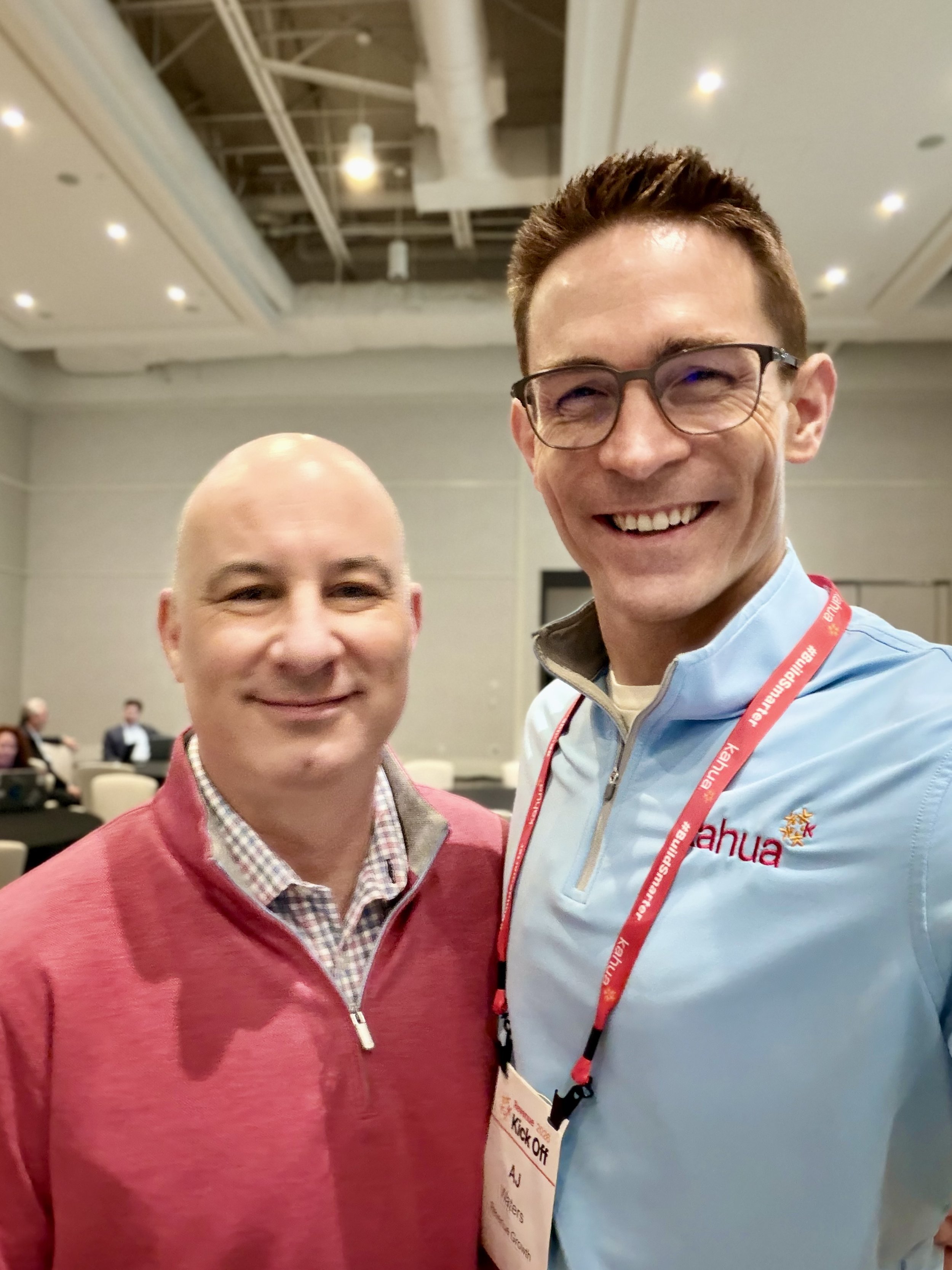
Ralph Barsi at Revenue Kickoff 2026 for Kahua on Feb 19, 2026.
Construction doesn't have a talent shortage. It has a coaching tree shortage.
That difference matters more than most leaders in this industry are willing to admit.
A talent shortage is something you solve with better recruiting, better marketing, better trade school partnerships. A coaching tree shortage is something you can only solve with a decade of intentional leadership decisions that you would’ve had to instill years ago.
Bill Walsh is the cleanest example of what a coaching tree actually looks like. He didn't just win Super Bowls with the 49ers. He produced Mike Holmgren, George Seifert, Andy Reid and Mike Shanahan, among others. A generation of NFL head coaches traced their development back to one guy who understood that his real job wasn't just winning games.
His real job was building people who could win long after he was gone.
While Walsh's record is impressive, his coaching tree is the true legacy. And in construction right now, with roughly 40% of the workforce projected to retire in the next three to five years, the industry is about to find out which companies built trees and which ones just built rosters.
The Wrong Promotion, Repeated for Forty Years
The way construction has historically promoted people almost guarantees this outcome. The best welder becomes the foreman. The best estimator becomes the chief estimator. The best scheduler ends up running the scheduling group, and the best PM eventually gets promoted into operations leadership. Technical mastery gets rewarded with leadership responsibility.
That all sounds well and good until you realize that technical mastery and people development are two completely different sports played on two completely different fields. One is about getting the work right. The other is about getting people right so the work keeps getting done right long after you've moved on, retired, or gotten hit by the proverbial bus (personally, I prefer the “win the lottery” version of that metaphor).
For decades, construction has been heavily focused on measuring the first while barely paying attention to the second. The result is a generation of senior leaders who are extraordinary at their craft but underdeveloped at building the next generation. Something like that can work when the workforce is stable, the bench was deep, and people stayed at one company for thirty years.
But none of those conditions are true anymore, and the bill is coming due.
The Difference Between Talent and Teams
Ralph Barsi spent four years scaling ServiceNow's global sales development organization from 75 people to 230 across 15 offices while the company grew from just under $1B in revenue to $4B plus. He's built more leaders than most companies have ever hired, which made him the perfect individual to have this conversation with. Turning to what separates a group of talented people from a high-performing team, Ralph didn’t bring up the typical answers of talent or strategy.
Instead, his focus was a distinction that most leaders miss entirely.
“Being on a team means your name is on the roster, your hard hat has the company logo and you show up to the morning huddle. Being a team means you've figured out how to make each other better, you trust each other under pressure and you've internalized that your individual success is meaningless if the group fails.”
Ralph was paraphrasing Marcus Luttrell, the Navy SEAL known as the Lone Survivor. This distinction is everything, and it's the line most construction organizations have never crossed. One is logistics. The other is leadership.
Most jobsites have the first. Very few have the second.
When What Doesn’t Scale Scales
Ralph said something else worth tattooing on the wall of every regional office in this industry. He said that when you're scaling a team, you almost have to do the things that don't scale in order to scale. Get on the plane. Sit across the table. Know where your people grew up, where they are on their career arc, what's bugging them this quarter and what they're trying to build for their family.
It's the kind of attention that doesn't show up on a productivity dashboard, and it's exactly the kind of thing that gets cut first when schedules tighten and budgets squeeze.
But it shouldn't. Because the people who feel known stay and the people who feel like a headcount leave. In an industry hemorrhaging institutional knowledge to retirement at the rate construction is about to experience, attrition isn't a line item on a turnover report. It's existential. Every superintendent who walks out the door with thirty years of project memory and no one trained to replace them is a future cost overrun, a future schedule miss and a future client relationship at risk.
The leaders who treat the unscalable work as optional are the ones who will pay for it when the bench finally cracks.
Inverting the Org Chart
Probably the most counterintuitive thing Ralph said is that the great leaders see themselves at the bottom of the org chart, not the top.
A leader’s job is to remove obstacles from the people they're supposed to be serving, which is a complete inversion of how most construction leadership has historically operated. The industry inherited a command-and-control culture from its military and industrial roots, and that culture made sense when the work was repetitive and the problems primarily physical.
That simply doesn’t describe construction in 2026.
The work is more complex than it's ever been, with mega-projects, integrated delivery models and digital workflows that didn't exist a generation ago. The workforce is in active flux, with retirements accelerating and new entrants demanding a different kind of working relationship than their predecessors accepted. This leads to problems that are increasingly digital and human, rather than purely physical.
Command-and-control leadership doesn't build coaching trees in that environment. It builds dependency, and dependency walks out the door the moment the dependent leader retires.
The Test and the Real Question
So, here’s a simple test for any construction leader reading this.
If you won the lottery tomorrow, how many people on your team could step into your role and do it competently?
Not eventually, not after a year of grooming, but tomorrow. If the answer is zero, you don't have a coaching tree. You have a single point of failure dressed up as a career, and you've built an organization that will struggle the moment you're no longer in it.
The companies that survive the next decade won't be the ones that recruit the hardest or pay the most. They'll be the ones whose leaders quietly built coaching trees ten years ago. The ones whose superintendents trained three superintendents, whose PMs developed five PMs and whose foremen made it their job to produce the next foreman.
Yes, that work is unglamorous. No, it doesn't show up on a quarterly report. Yes, it requires leaders to define their success by what continues after they leave rather than what they accomplish while they're there.
But while we love to talk about labor shortages and “the kids these days,” the harder conversation is one that Ralph kept coming back to.
“People don't leave organizations, they leave leaders.”
That means some meaningful percentage of the labor shortage isn't demographic at all. It's a leadership shortage wearing a demographic disguise. It’s high time we take a look in the mirror and fix it.
Construction is cool, tell your friends!