We Can’t Build Anything Worthwhile If We’re Busy Fighting Each Other
I’ve spent my entire career in and around construction and if there’s one thing every jobsite has taught me, it’s this: We are really, really good at fighting.
And no, I don’t mean a healthy debate here and there or the typical “my concrete folks vs. your concrete folks” rivalry. I mean fighting. The kind where we draw battle lines with redlines, weaponize RFIs and treat documentation like ammunition.
I get it. Construction is one of the few industries where a misplaced comma can cost millions and a missing bolt can stop a project cold. The stakes here aren’t theoretical, they’re concrete and steel, so somewhere along the way we convinced ourselves that survival requires being on constant defense.
But somewhere along the way, we also forgot something essential: You cannot build anything meaningful with clenched fists.
And in this week where we focus on giving thanks, that truth is becoming harder to ignore.
The Cost of an Adversarial Industry
Let’s have an honest conversation about where we are right now. Construction has become one of the most adversarial industries in the world. It’s an “us versus them” culture between owners, designers, contractors, subs and often even teams within the same organization.
You’ve seen it. I’ve seen it. Heck, we’re probably even participating in it.
We guard information like state secrets. We submit bids knowing the plans aren’t complete (only to justify it by whispering, “We’ll make it up in change orders.”). We treat contracts as protection instead of partnership.
And by golly, we hold onto documentation. Not as a tool for collaboration, but as a shield for litigation, leading to the all-too-common saying, “Those who have the best documentation win.”
But don’t take my word for it, check the data. The party with the most complete, organized and defensible paper trail often walks out victorious in disputes.
The average North American construction dispute now costs over $40 million.
52% of all rework is caused by poor communication and bad data, costing more than $31 billion annually.
Incomplete bid documents lead to claims averaging 30% of contract value and cause schedule delays of 50% or more.
Legal discovery alone can consume up to 70% of litigation costs.
But the most painful part? Even when somebody wins, everybody loses.
Let that sink in. We are burning tens of billions (every year) because we can’t get out of our own way. And that’s just the financial cost.
The human cost?
It’s the burnout. The mistrust. The cynicism. It’s supervisors who assume every handshake hides a trap. It’s project engineers who start their careers wide-eyed and end their first project weary and suspicious.
Construction is hard enough. We don’t need to make it harder on each other.
Yet for some reason, we do.
The Good News: Collaboration Works
While it’s easy to point fingers and say, “This is just how construction is,” that doesn’t necessarily hold up anymore. There are real-world results telling a different story, one where when we collaborate, really collaborate, everything changes.
Design-Build is Working
When designers and builders sit on the same side of the table from day one, projects double their delivery speed (literally). CII research shows design-build delivery is 102% faster and has significantly less cost growth than traditional design-bid-build.
IPD Enables Collaboration
Then there’s Integrated Project Delivery, which is basically collaboration on expert mode. Everybody signs up together: owner, designer, contractor, key trades. They share the risk, share the reward and share the accountability.
And when that happens, the dynamic on the project changes fast. Instead of people lawyering up every time there’s an issue, you see fewer claims. Trust goes up. The day-to-day just feels smoother. While IPD isn’t magic, it does remove the incentive to fight and replaces it with an incentive to actually win together.
Project Partnering is Old School but Still Works
Partnering is the old-school cousin of IPD, and it still works. You get everyone in a room at the beginning of the job (owner, GC, subs, designers) and instead of starting with, “Here’s what the contract says,” you start with, “What does success look like for all of us?”
State DOTs and big owners that have done this for years will tell you the same thing: When you make time upfront to build real relationships, you get better cooperation in the field.
It’s amazing what happens when you treat each other like humans instead of potential defendants.
Technology That Actually Brings Us Together
And then there’s the tech side of this. We’ve finally got tools that can help us behave the way we say we want to behave.
Connected networks allow everyone to see the same relevant information at the same time instead of emailing around five different versions of a spreadsheet. BIM lets teams clash and coordinate in a model instead of clashing in the field. Integrated dashboards make progress and risk visible in real time. It all drags us out of our silos and enforces the mantra of a single version of the truth.
And when there’s one source of truth, you’re no longer arguing about what happened. You’re talking about what to do next.
The Biggest Shift Isn’t in Processes… It’s in Us.
We can choose a delivery method. We can buy software. We can even attend training on Lean or collaborative contracting or conflict resolution. But collaboration is ultimately a people decision. A cultural shift. A posture.
And, ironically, it’s a decision construction people should understand better than anyone. Collaboration is nothing more than building something together and that is literally what we do.
We coordinate hundreds of people. We marry dozens of disciplines. We synchronize thousands of tasks. We assemble something out of nothing as a project team. When you stop and think about it, fighting each other instead of fighting the problem is completely backwards.
So therein lies the twist.
The Mindset Shift We Actually Need
Look, I get it, the overabundance of “gratitude posts” around Thanksgiving come across soft for an industry built on sweat, toughness and too much caffeine.
But hear me out.
Thanksgiving is not about being mushy. It’s about remembering what actually matters. It’s about pausing long enough to appreciate the people next to you, the ones helping you get through the hard things. So maybe, just maybe, the cure for our adversarial culture is something surprisingly simple: Gratitude.
Believe me, it’s really hard to be grateful and adversarial at the same time. To recognize someone for their contribution while also preparing to pounce on their mistake. To say, “We’re all in this together” and then withhold information to gain leverage.
Gratitude forces us to confront an uncomfortable truth. The truth is that the people we fight with are the same people we must rely on. The owner who pushes you on schedule also approves your pay apps. The subcontractors who drive you crazy also get the work built when the drawings haven’t caught up.
Nothing in construction gets done alone. Nothing.
Everything is Better When We Work Together
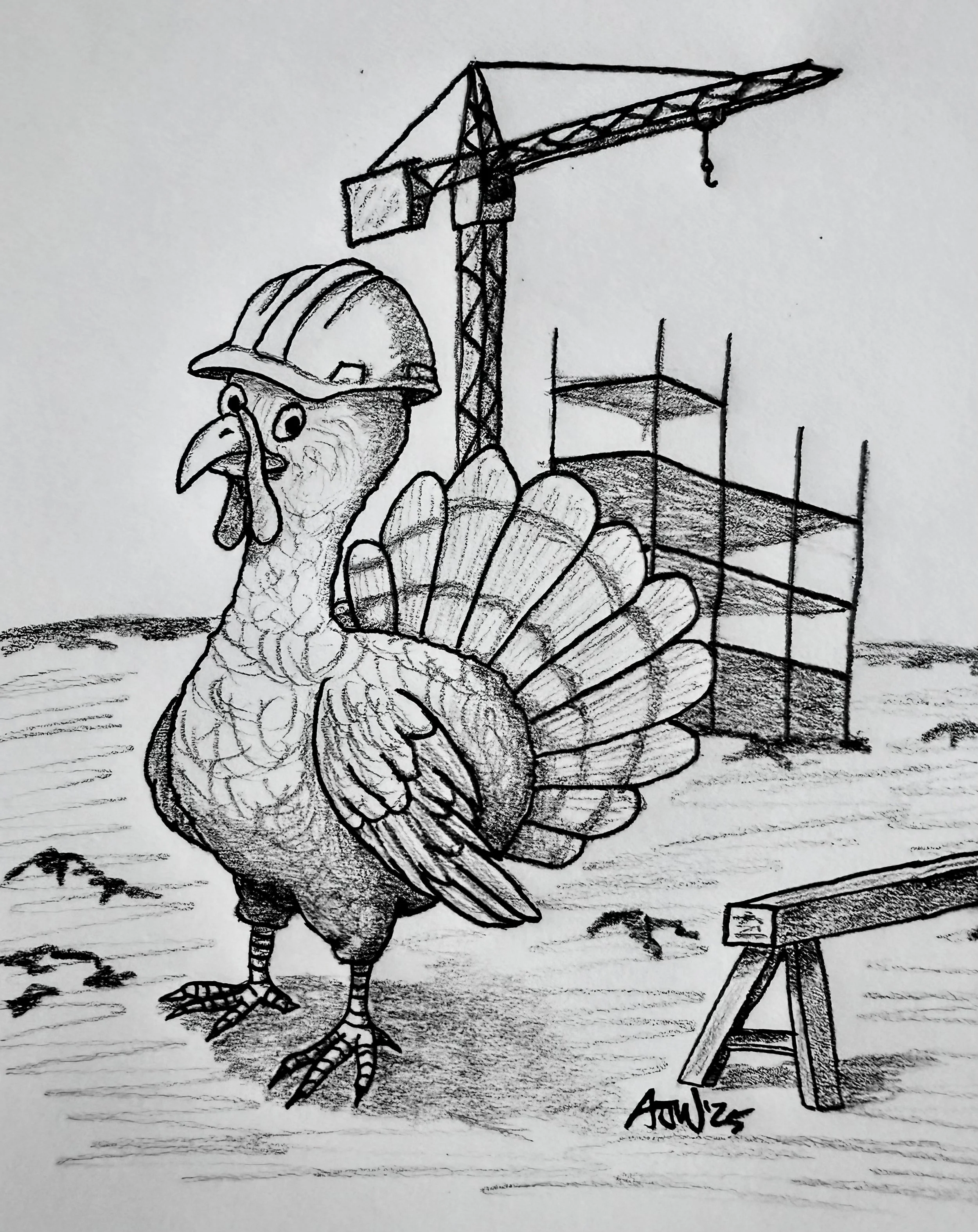
So, as we head into Thanksgiving this week, here’s my challenge for all of us. Let’s put the adversarial attitude down for a minute.
Let’s pause the positioning, drop the defensiveness and step back to see the humans behind the hard hats and contracts.
Let’s choose partnership, choose collaboration and choose to be grateful for the people who make this wild, chaotic and frustratingly beautiful industry possible.
If we can make a point to do that, disputes will shrink, communication will improve, projects will run smoother and we’ll leave behind a better industry than we inherited.
Yeah, construction is hard. Building things together is harder. And fighting each other while trying to build? That’s darn near impossible.
But we can do impossible things when we stop seeing each other as adversaries and start seeing each other as partners.
And that’s something worth building on.
Construction is cool, tell your friends!